Best Enclosed 3D Printers (2026)
The Bambu Lab P1S is the best enclosed 3D printer for most people: a $349 CoreXY printer that Bambu lists as ideal for ABS and ASA. For large ABS or nylon parts, the Creality K2 Plus adds a 60 °C heated chamber.
Updated October 28, 2026
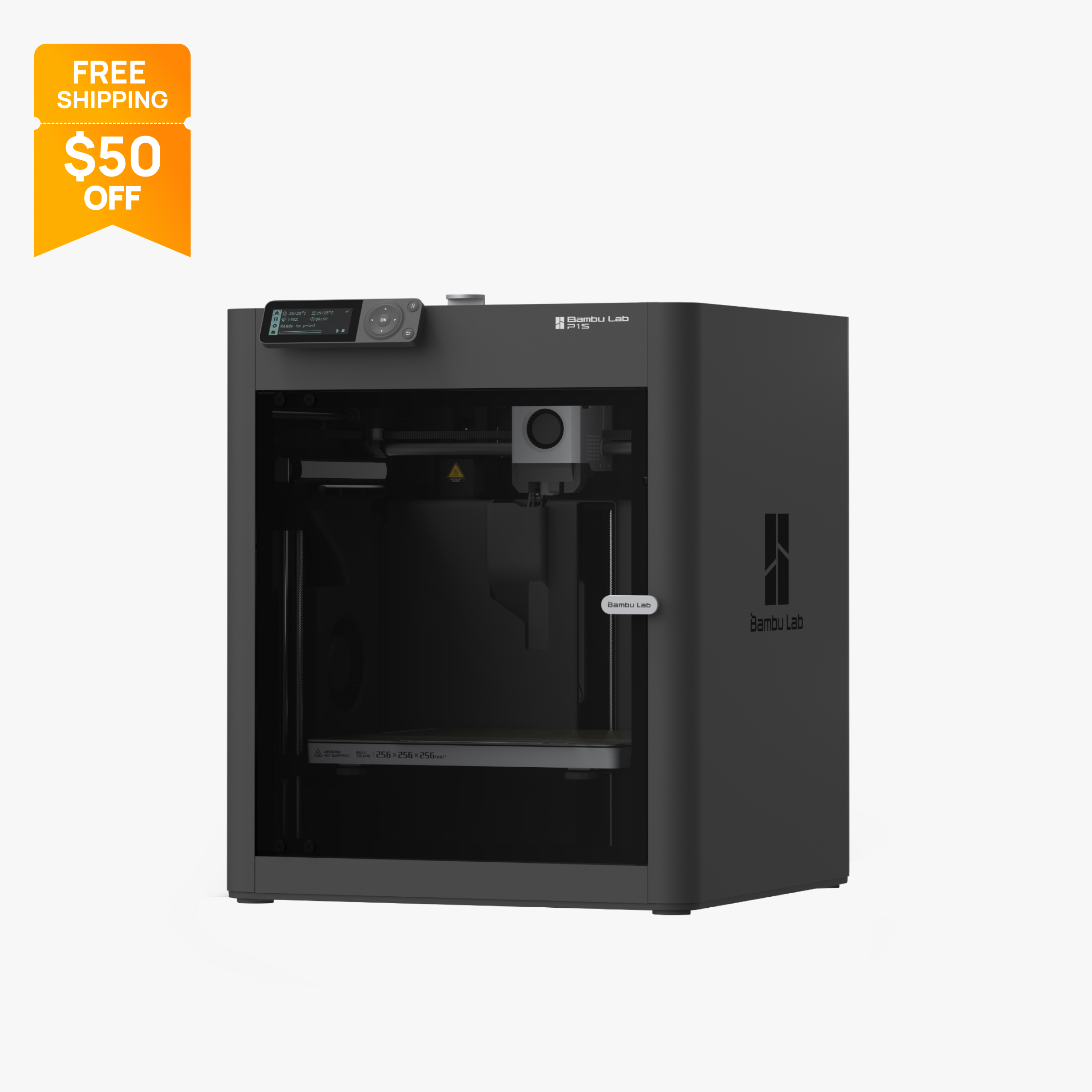
Enclosed 256 mm CoreXY printer with carbon filter, 20,000 mm/s² acceleration and AMS support.
$349
350 mm enclosed CoreXY printer with a 60 C heated chamber, 350 C nozzle and optional CFS for up to 16 colors.
$999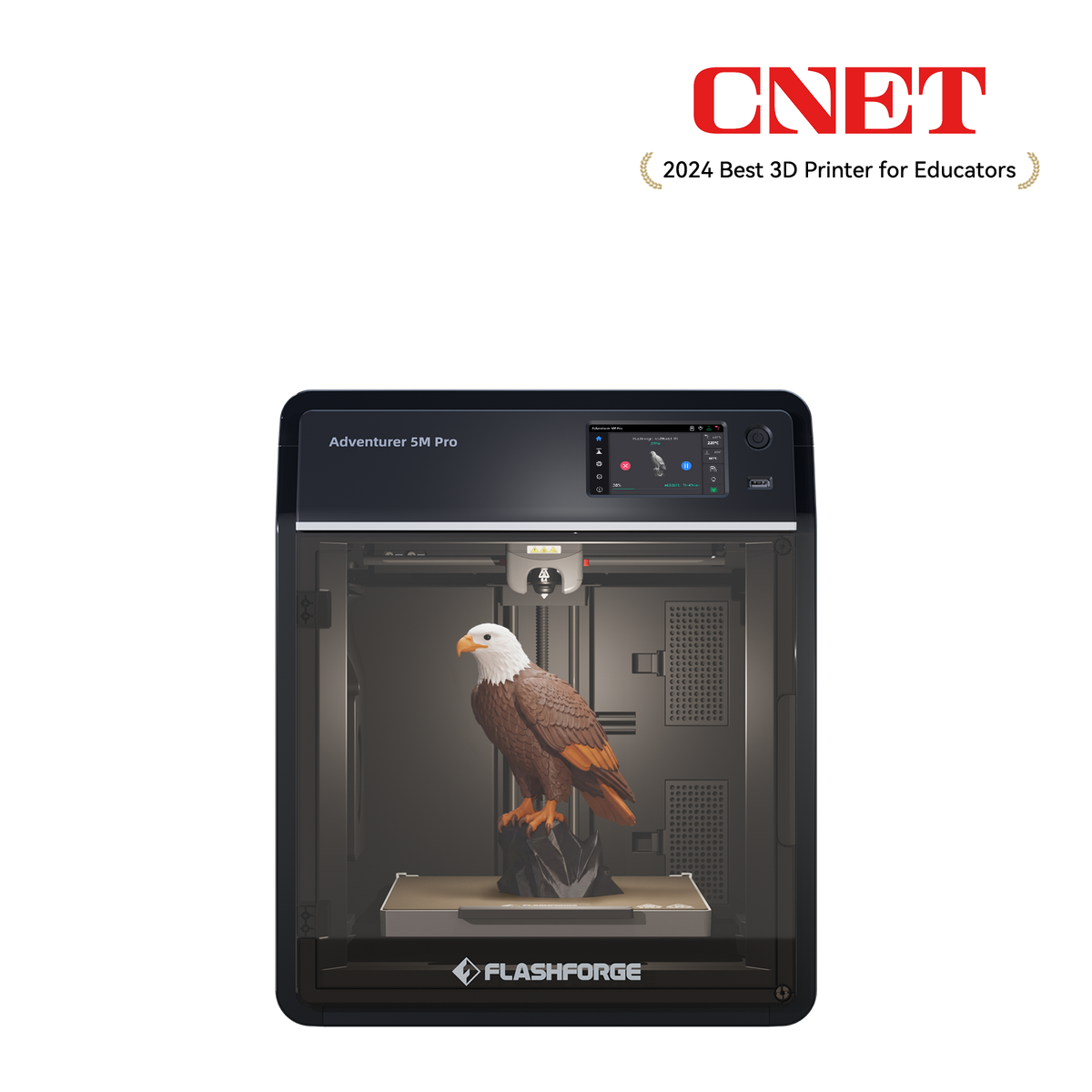
Enclosed CoreXY 220 mm cube printer with HEPA and carbon filtration, camera and ABS/ASA support
$379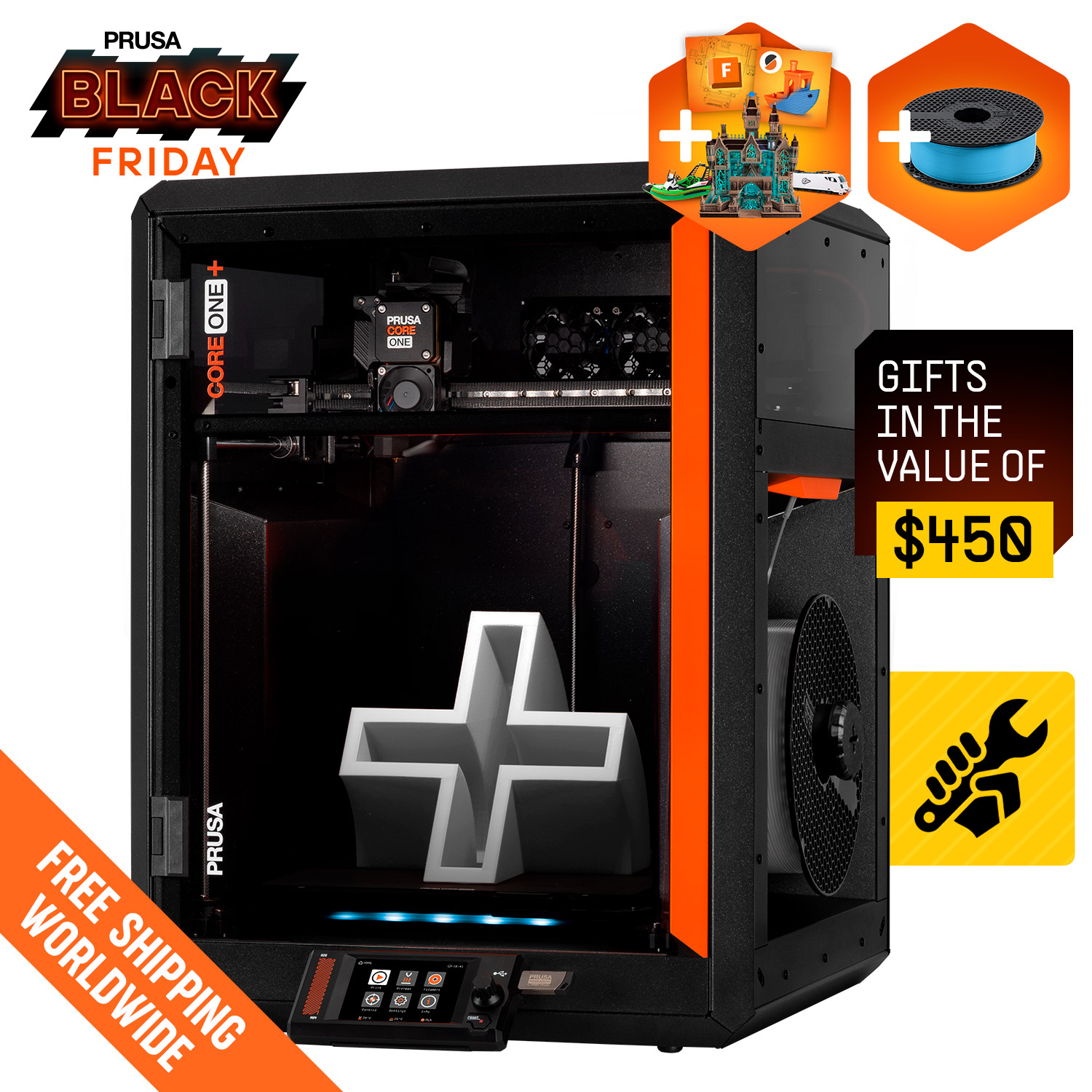
Enclosed CoreXY Prusa, now sold as the CORE One+ (Gen 2), with a 250 x 220 x 270 mm build, 55 °C heated chamber and optional MMU3
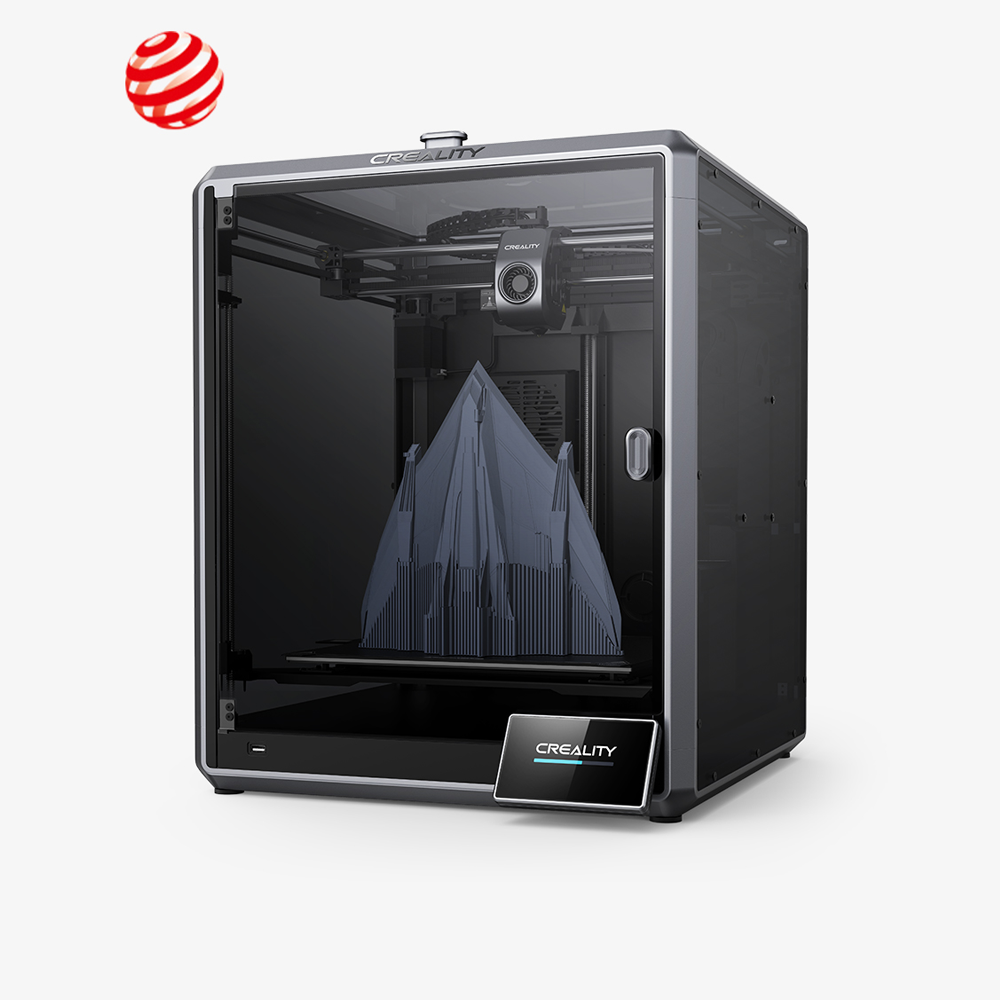
Enclosed 300 mm CoreXY printer rated at 600 mm/s, with an AI camera, LiDAR first-layer scanning and Ethernet.
$549
Compact enclosed CoreXY printer with a 300 C hardened steel nozzle, AI camera and a 600 mm/s rating.
$499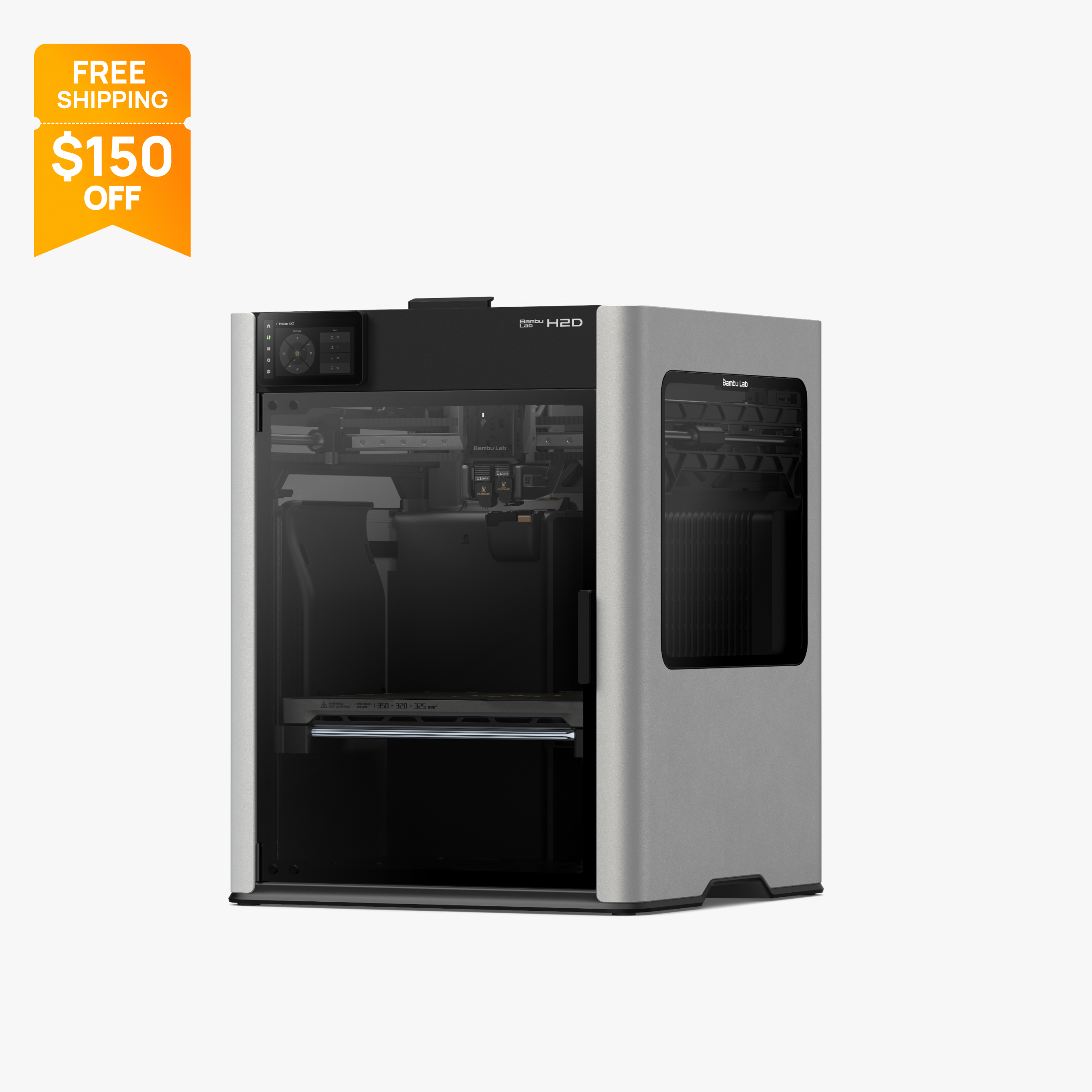
Large-format dual-nozzle printer with 350 °C hot ends, 65 °C heated chamber and optional laser module.
$1,399
Comparison table
| Spec | Bambu Lab P1S | Creality K2 Plus | Flashforge Adventurer 5M Pro | Prusa Core One | Creality K1 Max | Creality K1C | Bambu Lab H2D |
|---|---|---|---|---|---|---|---|
| Type | FDM | FDM | FDM | FDM | FDM | FDM | FDM |
| Price | $349 | $999 | $379 | Check current price | $549 | $499 | $1,399 |
| Build volume | 256×256×256 mm | 350×350×350 mm | 220×220×220 mm | 250×220×270 mm | 300×300×300 mm | 220×220×250 mm | 325×320×325 mm |
| Max speed | 500 mm/s | 600 mm/s | 600 mm/s | 300 mm/s | 600 mm/s | 600 mm/s | 1000 mm/s |
| Multicolor | Yes (AMS or AMS 2 Pro (optional, up to 16 colors with 4 units)) | Yes (CFS (optional; Combo includes 1 CFS for 4 colors, up to 4 CFS for 16 colors)) | No | Yes (MMU3 (optional, up to 5 filaments); INDX toolchanger (up to 8, listed as coming soon)) | No | No | Yes (Dual nozzle; AMS 2 Pro / AMS HT optional (AMS 2 Pro included only in the AMS Combo)) |
| Enclosed | Yes | Yes | Yes | Yes | Yes | Yes | Yes |
| Auto bed leveling | Yes | Yes | Yes | Yes | Yes | Yes | Yes |
| Connectivity | Wi-Fi, Bluetooth, Bambu-Bus, microSD | Wi-Fi (2.4 and 5 GHz), Ethernet, USB drive, Creality Cloud | Wi-Fi, Ethernet, USB | Ethernet, Wi-Fi (optional module), USB drive, Prusa Connect | Wi-Fi, Ethernet, USB drive, Creality Cloud | Wi-Fi, USB drive, Creality Cloud | Dual-band Wi-Fi, USB |
| Noise | 48 dB | Not listed | 55 dB | Not listed | Not listed | Not listed | Not listed |
| Release year | 2023 | 2024 | 2023 | 2025 | 2023 | 2024 | 2025 |
How we chose
Every pick is a fully enclosed filament (FDM) printer that its maker currently sells. We ranked them by what matters for ABS, ASA and other warp-prone materials: whether the chamber is actively heated or passively enclosed, the filtration the maker lists, maximum nozzle and bed temperatures, build volume, and price. Open-frame printers were not eligible, even with an optional enclosure kit. Picks are based on manufacturer specifications and official store prices, not lab tests. Prices are at the time of writing (October 2026), and sale prices change often. Read more about our process on the About Us page.
The picks
1. Bambu Lab P1S: best enclosed 3D printer overall
The Bambu Lab P1S is $349 on Bambu's US store at the time of writing (October 2026), down from a regular $399, which makes it the least expensive enclosed printer on this list. It is a CoreXY machine with a 256 x 256 x 256 mm build volume, a 300 °C nozzle, a 100 °C bed, 20,000 mm/s² acceleration and an activated carbon filter. Bambu lists ABS and ASA as ideal materials for the P1S.
It also supports up to four AMS units for as many as 16 colors or materials. The P1S AMS Combo is $479 and the AMS 2 Pro Combo, with active filament drying, is $509 at the time of writing.
Who it suits: most people who want ABS and ASA parts, such as car parts, outdoor brackets or enclosures, alongside everyday PLA and PETG. The tradeoffs: the chamber is passive, so Bambu rates PA and PC as capable rather than ideal. Carbon and glass fiber filaments need an upgraded nozzle and extruder first. The chamber camera records at 0.5 fps, which suits time-lapses but not smooth live viewing. For another enclosed option, read Prusa CORE One vs Bambu Lab P1S.
2. Creality K2 Plus: best heated-chamber printer for ABS and engineering filaments
The Creality K2 Plus actively heats its chamber to 60 °C, and Creality says ABS, ASA and PPS need a 60 °C chamber. It pairs that with a 350 °C hardened steel nozzle, a 120 °C bed and a 350 x 350 x 350 mm build volume, so it can handle large parts in materials such as PA-CF and PPA-CF. Creality rates it at 600 mm/s and 30,000 mm/s². Dual-band Wi-Fi, Ethernet and a 1080p chamber camera are built in.
It is $999 without the CFS multicolor unit on Creality's US store at the time of writing (October 2026), down from a regular $1,299. The Combo with one CFS (four colors) is $1,199.
Who it suits: anyone printing large ABS, ASA or nylon-class parts, where a heated chamber does the most good. The tradeoffs: it costs nearly three times as much as a P1S and weighs 35 kg according to Creality. Tom's Hardware heat-soaked the bed for 15 minutes before printing and found TPU jammed in the CFS tubing. For a head-to-head with Bambu's flagship, see Bambu Lab H2D vs Creality K2 Plus.
3. Flashforge Adventurer 5M Pro: best filtration for the money
The Flashforge Adventurer 5M Pro is $379 on Flashforge's US store at the time of writing (October 2026), down from a regular $529. Its standout feature is filtration: Flashforge lists HEPA and activated carbon filters with internal and external circulation, aimed at particles and VOCs. The P1S, by comparison, lists only an activated carbon filter.
It is a CoreXY printer with a fully enclosed metal frame, and Flashforge lists ABS and ASA as supported. A built-in camera provides monitoring and time-lapses, and Flashforge lists 50 dB in low-noise mode. Quick-swap nozzles from 0.25 mm to 0.8 mm cover fine detail and fast prints, and Wi-Fi, Ethernet and USB are all included.
Who it suits: home offices, classrooms and shared rooms where filtration and noise matter more than build size. The tradeoffs: the 220 x 220 x 220 mm build volume is small for the price, the 280 °C hotend and 100 °C bed rule out polycarbonate, there is no multicolor system, and Flashforge gives no chamber temperature figure or active chamber heating. The filters are consumables that need replacing.
4. Prusa CORE One: best enclosed printer for open-source fans
The Prusa CORE One is now sold as the CORE One+ (Gen 2) on the same product pages. It is an enclosed CoreXY printer with a 250 x 220 x 270 mm build volume and active chamber heating up to 55 °C, a 290 °C hotend and a 120 °C bed. Ethernet, USB and Prusa Connect are built in; Wi-Fi uses an optional module. The optional MMU3 adds up to five filaments, and Prusa lists the INDX toolchanger as coming soon.
Prusa sells it assembled or as a kit. We could not confirm the current US price at Prusa's checkout, so check prusa3d.com before you buy; Prusa's own comparison table lists the assembled version above $1,000.
Who it suits: buyers who want a heated chamber with open firmware, printable spare parts and an upgrade path from Prusa. Prusa also sells upgrade kits so existing CORE One owners can move to Gen 2 hardware. The tradeoffs: the assembled version costs more than many enclosed CoreXY printers, Prusa publishes no numeric top speed, and the standard hotend tops out at 290 °C unless you add Prusa's separate HT hotend.
5. Creality K1 Max: best large enclosed printer under $600
The Creality K1 Max is $549 on Creality's US store at the time of writing (October 2026), down from a regular $899. It encloses a 300 x 300 x 300 mm build volume, which makes it the cheapest 300 mm enclosed printer on this list. It ships with a 300 °C hardened steel nozzle for abrasive carbon-fiber-filled filaments, an AI camera, AI LiDAR first-layer scanning, and both Wi-Fi and Ethernet.
Creality rates it at up to 600 mm/s and 20,000 mm/s², though the 600 mm/s figure came from a special Surface Mode, so typical speeds are lower.
Who it suits: makers who need large ABS or ASA parts, such as helmets and cases, and want a passive enclosure at a mid-range price. The tradeoffs: it has no active chamber heater, unlike the K2 Plus, so very large ABS or nylon parts can still warp in a cool room. There is no multicolor system, and the 100 °C bed limits some engineering materials. Creality's newer K2 Pro adds 60 °C chamber heating at a similar price, though Creality does not call it a replacement.
6. Creality K1C: best compact enclosed printer for carbon fiber
The Creality K1C is $499 on Creality's US store at the time of writing (October 2026), down from a regular $559. It is an enclosed CoreXY printer with a 220 x 220 x 250 mm build volume and an all-metal hotend with a hardened steel nozzle up to 300 °C, built for abrasive carbon-fiber filaments. Creality rates it at up to 600 mm/s with 20,000 mm/s² acceleration and includes an AI camera for error detection and time-lapses. It supports Creality Print, PrusaSlicer, Cura and Simplify3D.
Who it suits: buyers who want carbon-fiber nylon or PETG straight away without a nozzle upgrade, in a smaller footprint than the K1 Max.
The tradeoffs: the K1 Max costs only $50 more at the time of writing and gives a 300 mm build, so the K1C makes sense mainly if space is tight. There is no active chamber heater, no multicolor system and no Ethernet port. If you are weighing it against another compact enclosed printer, see QIDI Q1 Pro vs Creality K1C, though note the Q1 Pro is discontinued.
7. Bambu Lab H2D: best for high-temperature materials
The Bambu Lab H2D has the most capable enclosure on this list: active chamber heating to 65 °C, 350 °C hot ends and a 120 °C bed, which Bambu says support PA, PC, PPS and fiber-reinforced engineering filaments. Filtration includes a G3 pre-filter, an H12 HEPA filter and activated carbon for particles and odors. It also has two nozzles and a 325 x 320 x 325 mm single-nozzle build volume.
The base H2D is $1,399 and the H2D AMS Combo is $1,599 on Bambu's US store at the time of writing (October 2026). Optional 10 W or 40 W laser modules add engraving and cutting.
Who it suits: small studios and engineers who print polycarbonate, nylon and fiber-reinforced parts and want the strongest filtration. The tradeoffs: it weighs 31 kg, measures 492 x 514 x 626 mm, and draws up to 1320 W on 110 V circuits. For ABS and ASA alone, the K2 Plus or P1S cost far less.
What to look for in an enclosed 3D printer
Passive enclosure versus heated chamber
A passive enclosure is a box around the printer. It blocks drafts and traps some of the heat rising from the bed, which is why it helps with ABS: Prusa's ABS guide says the material warps significantly, shrinks about 1 to 2% as it cools, and should be printed inside an enclosure with a higher ambient temperature. The P1S, K1 Max, K1C and Adventurer 5M Pro use passive enclosures.
A heated chamber adds a heater that raises the air temperature on purpose: 55 °C on the CORE One, 60 °C on the K2 Plus and 65 °C on the H2D. Creality says ABS, ASA and PPS need a 60 °C chamber. In practice, a passive enclosure is enough for small and medium ABS and ASA parts, while large parts and materials such as PA and PC benefit most from active heating. Bambu reflects this by rating PA and PC only as "capable" on the passive P1S.
Temperatures
Check the nozzle and bed limits against the materials you want. A 300 °C nozzle and 100 °C bed cover PLA, PETG, ABS and ASA. Polycarbonate and many nylons want more, which is why the K2 Plus and H2D list 350 °C nozzles and 120 °C beds.
Hardened nozzle
Carbon-fiber and glass-fiber filaments wear soft nozzles. The K1C, K1 Max and K2 Plus ship with hardened steel; the P1S needs an upgrade first.
Size and weight
Enclosed printers are bigger and heavier than open-frame models. The K2 Plus is 35 kg and the H2D is 31 kg, so plan for a sturdy bench.
ABS and ASA fumes: what an enclosure does and does not do
Printing plastics releases ultrafine particles and volatile organic compounds (VOCs). A 2016 study in Environmental Science & Technology (Azimi et al.) found that particle emissions varied mainly by filament material, and that ABS and HIPS filaments emitted styrene at roughly 10 to 110 µg per minute, while PLA emitted lactide at roughly 4 to 5 µg per minute. Prusa's ABS guide says the material releases fumes that could pose a potential health risk and recommends a well-ventilated room, while avoiding drafts directly on the print.
An enclosure on its own only contains emissions; it does not destroy them. Filters do the work. In general, HEPA filters target particles and activated carbon targets VOCs and odors, which is why makers list them separately: the Adventurer 5M Pro has both, the H2D adds an H12 HEPA filter and a G3 pre-filter to carbon, and the P1S lists carbon only. NIOSH notes that most printer emissions are nanoparticles and recommends ventilation, local exhaust, or HEPA filtration as controls. Treat built-in filters as one layer of protection, keep the room ventilated, and replace filters as the maker recommends.
What changed this update
- The Bambu Lab X1 Carbon is no longer sold on Bambu's US store; the P1S and H2D cover the enclosed Bambu range here.
- The Elegoo Centauri Carbon is no longer sold new; its successor is the Centauri Carbon 2.
- QIDI discontinued the Plus4 and Q1 Pro, both enclosed with heated chambers; their successors are the QIDI Plus5 and QIDI Q2.
- The Anycubic Kobra S1 Combo is sold out; Anycubic now sells the Kobra S1 ACE 2 Pro Combo.
Looking for the biggest enclosed options? Our best large 3D printers page ranks printers with at least 300 mm in X and Y.
Frequently asked questions
What is the best enclosed 3D printer?
For most people it is the Bambu Lab P1S, at $349 on Bambu's US store at the time of writing (October 2026). Bambu lists ABS and ASA as ideal materials for it, and it supports up to 16 colors with AMS units. For large engineering parts, the Creality K2 Plus adds a 60 °C heated chamber for $999.
What is the best 3D printer for ABS?
An enclosed printer, ideally with a heated chamber for large parts. Prusa recommends printing ABS in an enclosure with a higher ambient temperature because it warps and shrinks as it cools. The Bambu Lab P1S handles ABS well for most parts, and the Creality K2 Plus and Bambu Lab H2D actively heat their chambers.
Do I need an enclosed 3D printer?
You need one for ABS, ASA and most engineering filaments, which warp in drafts and cool rooms. For PLA, PETG and TPU an open-frame printer works fine. An enclosure also keeps hands and pets away from hot, moving parts.
Does an enclosure make 3D printing safe from fumes?
An enclosure contains emissions, but filters and ventilation remove them. HEPA filters target particles and activated carbon targets VOCs and odors. NIOSH recommends ventilation, local exhaust or HEPA filtration as controls, so keep the room ventilated even with a filtered printer.
What is the difference between an enclosure and a heated chamber?
A passive enclosure blocks drafts and traps heat from the bed. A heated chamber has its own heater that raises the air temperature, such as 60 °C on the Creality K2 Plus or 65 °C on the Bambu Lab H2D. Active heating matters most for large ABS parts and materials such as PA and PC.
What is the cheapest enclosed 3D printer?
Among our picks, the Bambu Lab P1S is the cheapest at $349, followed by the Flashforge Adventurer 5M Pro at $379, at the time of writing (October 2026). The Adventurer 5M Pro adds HEPA filtration but has a smaller 220 mm build volume.
Sources
- Bambu Lab P1S on the official US store (price, parameters, FAQ)
- Bambu Lab P1S technical specifications PDF (official)
- Creality US store, K2 Plus (official)
- Creality K2 Plus CFS Combo support and specifications (official)
- Tom's Hardware: Creality K2 Plus review
- Flashforge Adventurer 5M Pro product page (official US store)
- Prusa CORE One+ (Gen 2) assembled (official store)
- Prusa CORE One+ (Gen 2) assembly kit (official store)
- Creality US store, K1 Max 2025 (official)
- Creality US store, K1C 2025 (official)
- Bambu Lab H2D technical specifications (official)
- Bambu Lab H2D on the official US store (prices by configuration)
- Prusa Knowledge Base: ABS material guide
- Azimi et al. (2016), Emissions of Ultrafine Particles and VOCs from Desktop 3D Printers, Environmental Science & Technology (PubMed)
- NIOSH Science Blog: Characterizing 3D Printing Emissions and Controls in an Office Environment