Anycubic Kobra 3 Combo vs Bambu Lab A1 Combo
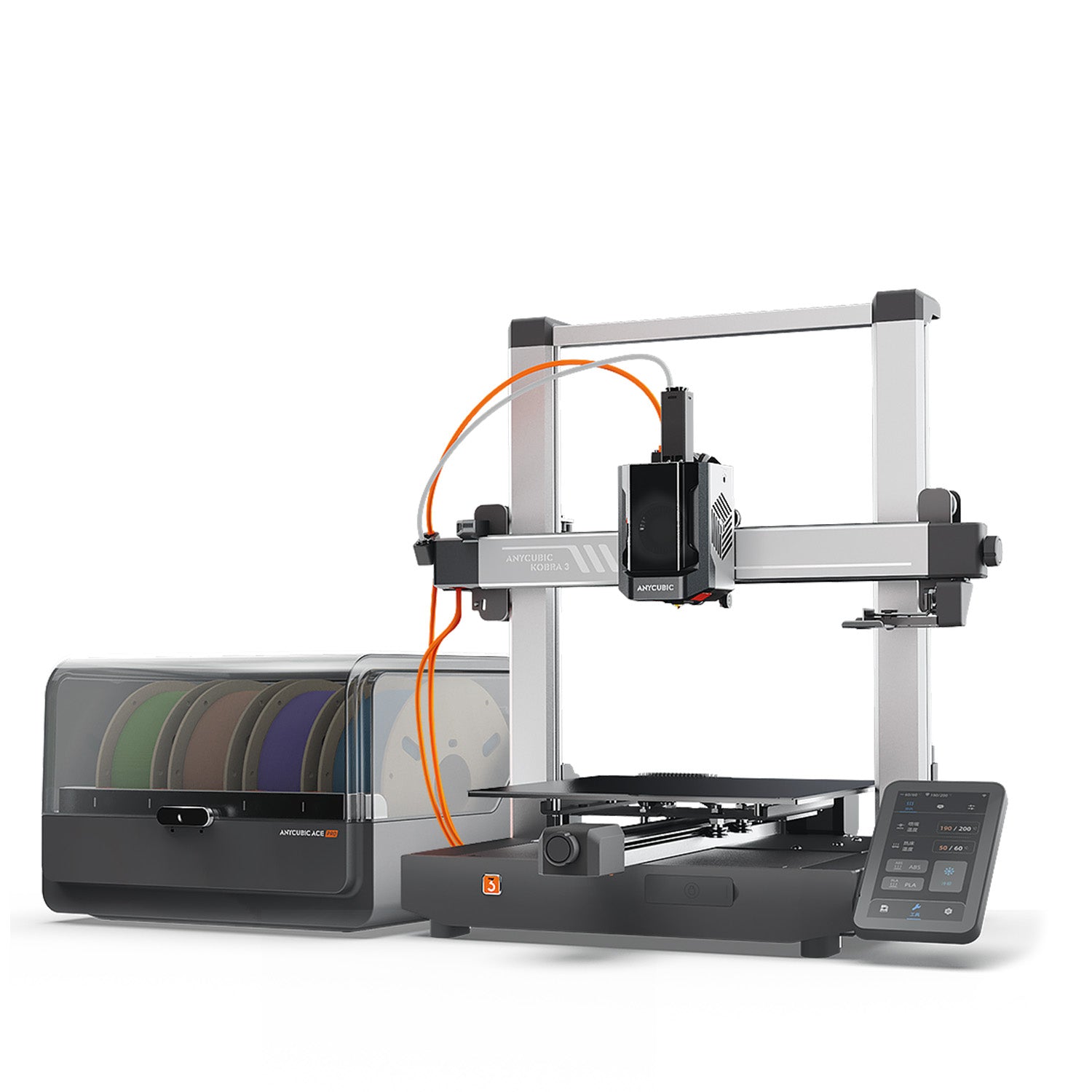
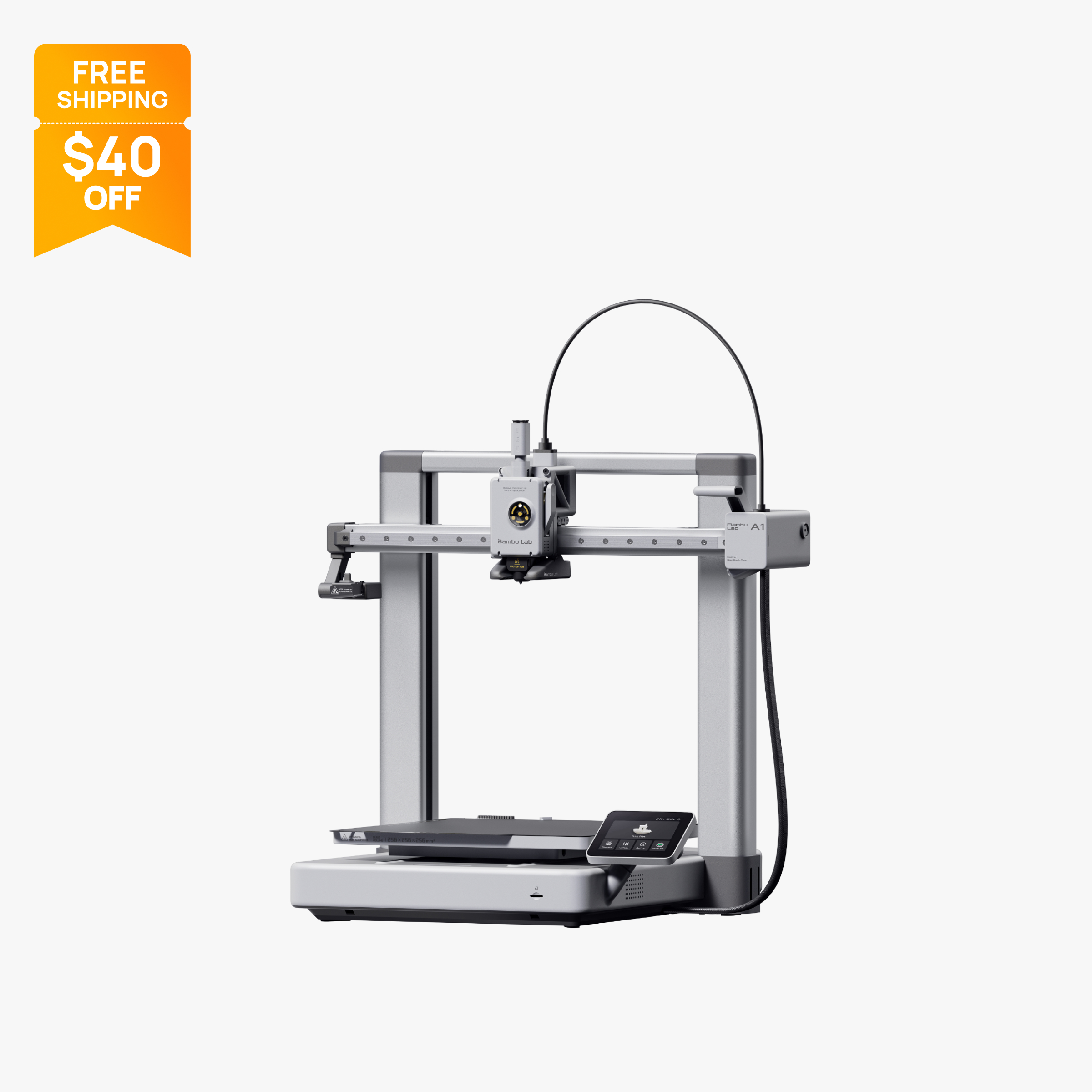
Verdict
Buy the A1 Combo if you want a new, supported multicolor printer: it is sold today at $359 (October 2026) with automatic calibration. The Kobra 3 Combo is sold out new, so it only makes sense as a used purchase if you want ACE Pro expansion to eight colors.
Specs side by side
| Spec | Anycubic Kobra 3 Combo | Bambu Lab A1 Combo |
|---|---|---|
| Type | FDM | FDM |
| Price | Check current price | $359 |
| Build volume | 250×250×260 mm | 256×256×256 mm |
| Max speed | 600 mm/s | 500 mm/s |
| Multicolor | Yes (ACE Pro (included, 4 colors; 8 colors with a second ACE Pro)) | Yes (AMS Lite (included, one unit, up to 4 colors)) |
| Enclosed | No | No |
| Auto bed leveling | Yes | Yes |
| Connectivity | Anycubic app, USB drive (print only) | Wi-Fi, Bambu-Bus, microSD |
| Noise | Not listed | 49 dB |
| Release year | 2024 | 2023 |
Quick answer
The Anycubic Kobra 3 Combo is no longer sold new: on 2026-10-28 Anycubic's official store lists it as sold out and says orders placed while it is out of stock receive a Kobra 4 Combo instead. This page is still useful if you are comparing used units, deciding whether to upgrade, or reading older reviews.
Pick the Kobra 3 Combo (used) if you want ACE Pro expansion to eight colors, a 110°C bed and an open-source slicer option. Pick the Bambu Lab A1 Combo if you want a printer you can buy new today, with a published 49 dB noise figure, automatic calibration and a bundled price of $359 at the time of writing (October 2026).
Key differences
Multicolor system and expandability
Both printers ship with a four-slot filament unit, and both are single-nozzle machines, so every color change purges filament. That adds print time and waste on models with many swaps, whichever bundle you choose.
The Kobra 3 Combo includes the ACE Pro, which gives four colors out of the box. Anycubic says a second ACE Pro takes you to eight colors. The A1 Combo includes the AMS Lite, and Bambu's FAQ states that the A1 supports only one AMS Lite, so four filaments per print is the ceiling.
Both systems have material limits. Anycubic notes that TPU cannot be fed through the ACE Pro, so TPU would have to be printed as a single material from a spool outside the ACE Pro. Bambu lists generic TPU, PETG-CF, ABS and ASA as unsupported in the AMS Lite. Bambu's RFID auto-setup only works with Bambu's own filament, so third-party spools need the material and color selected manually. If you expect to print many-color models, the Kobra's second-unit option is the only expansion path of the two. See our best multicolor 3D printers page for current options that are still sold.
Speed and acceleration
On paper the Kobra 3 Combo leads: 600 mm/s maximum speed and 20,000 mm/s² acceleration, against 500 mm/s and 10,000 mm/s² for the A1 Combo. Read those numbers carefully. Anycubic's own recommended print speed is 300 mm/s, with recommended acceleration of 10,000 mm/s², so the practical gap is smaller than the spec sheet suggests.
Maximum speed is a ceiling reached on simple moves, not a prediction of how fast a part finishes. Print time also depends on layer height, the number of color changes, purge settings and how aggressively the slicer profile uses acceleration. Neither manufacturer's headline number tells you which printer finishes a given model first.
If you are buying used, you will be running whichever slicer profile the printer shipped with or one you set up yourself. Ask the seller which firmware version and slicer profile they used, since both affect print results. For background on how motion systems affect speed, see how a 3D printer works.
Build volume, temperatures and materials
The two beds are close in size. The Kobra 3 Combo lists 250 x 250 x 260 mm and the A1 Combo lists 256 x 256 x 256 mm, which works out to about 16.3 liters against 16.8 liters of nominal volume. The Kobra is 4 mm taller; the A1 is 6 mm wider and deeper.
Both hotends reach 300°C. The Kobra's bed reaches 110°C against 100°C on the A1 Combo, a small edge for PETG adhesion. Neither printer is enclosed and neither has a heated chamber. Anycubic's spec table lists PLA, PETG and TPU, and Bambu lists ABS, ASA, PC and PA as not recommended on the open-frame A1 because of warping and weak layer bonding on larger parts.
For abrasive filaments, Bambu says the stainless steel nozzle must be swapped for hardened steel before printing carbon fiber. If ABS or ASA is on your list, an enclosed machine is the better route; our best enclosed 3D printers page covers current options, and A1 vs P1S explains the step up.
Software, connectivity and monitoring
The Kobra 3 Combo connects through the Anycubic app and prints from a USB drive (print only). Anycubic Slicer is open source, and Anycubic says Cura and OrcaSlicer can also be used for multicolor jobs. The camera is an optional 720P accessory, and remote monitoring plus AI detection need that extra purchase. Anycubic lists AI spaghetti detection, filament entanglement detection and power loss resume as standard features, and a 4.3 inch screen.
The A1 Combo lists Wi-Fi, Bambu-Bus and a microSD slot, with a 3.5 inch screen. Bambu says the printer runs Z-offset, bed leveling, vibration and nozzle pressure calibration automatically before each job, and Bambu's own RFID-tagged filament sets matching print settings in the AMS Lite. Bambu publishes an official unboxing guide for the A1 Combo on its wiki, which helps with the AMS Lite and PTFE tube setup.
The A1 Combo also has a published operating noise figure of as low as 49 dB on the US store. Anycubic's data lists no noise figure for the Kobra 3 Combo.
Availability and support
This is the biggest practical difference. The A1 Combo is listed and in stock on Bambu's US store. The Kobra 3 Combo is shown as sold out on Anycubic's store with only an EU plug variant, and the Kobra 3 V2 Combo (255 x 255 x 260 mm) is also sold out there. Anycubic does not formally call the Kobra 3 Combo discontinued, but you should not count on finding new stock. Anycubic's product page also says that if the Kobra 3 Combo is out of stock you will receive a Kobra 4 Combo instead, at no additional cost. Anycubic runs a separate US store that we could not read, so check there for US availability.
If you are considering a used Kobra 3 Combo, confirm that the ACE Pro is included, check the plug type for your country, and ask whether the optional camera comes with it. If you already own one and are weighing an upgrade, the Kobra 4 Combo named by Anycubic is the manufacturer's own path. Anycubic's Kobra 4 Combo page lists a 260 x 260 x 260 mm build volume, a 600 mm/s maximum speed, standard four-color printing with up to eight colors, 65°C active drying and operation at or below 48 dB in standard mode. Check Anycubic's page for current pricing and availability, because we do not list a price for it.
Filament waste and print time on many-color models
Because both printers use a single nozzle, every color change means retracting one filament, loading another and purging the old color out of the nozzle. Both listings note that single-nozzle color changes purge filament, and both bundles inherit that behavior. On a model with a few large color regions the cost is modest. On a model with hundreds of small color changes, purge waste and added time can become large relative to the part itself.
The practical advice is the same for both machines. Keep color changes to the layers that need them, use the slicer's purge-volume controls, and prefer designs that put colors on large flat regions. A second ACE Pro lets the Kobra hold more spools at once, but it does not reduce the purge cost of each swap. The extra slots simply mean you can load more distinct colors without swapping spools by hand. For a deeper look at the process, see how a 3D printer works.
Setup, noise and daily use
Both printers are sold as Combos so that the filament unit is part of the box. Bambu publishes an official unboxing guide for the A1 Combo, and says the printer calibrates itself automatically after setup. Anycubic lists LeviQ 3.0 auto-leveling with Z-offset, which reduces manual bed setup before the first print. Neither promises that you never need to touch the machine again, and the A1 Combo's AMS Lite sits beside the printer on a stand, so it needs more desk space than the printer alone.
Noise matters if the printer shares a room with you. Bambu's US store lists A1 operation as low as 49 dB. Anycubic's data lists no figure for the Kobra 3 Combo, so treat any claim about its noise as unverified until you hear a unit yourself. A used purchase from a local seller is a good chance to do that.
If you already own a Kobra 3 Combo
Owners do not need to rush. The Kobra 3 Combo still prints four colors with its ACE Pro, and a second ACE Pro remains the route to eight. The main reasons to move are practical rather than technical: you want automatic calibration and a quiet machine, you want an active store listing behind you, or you want the Kobra 4 Combo that Anycubic itself names as the replacement in its out-of-stock notice.
If you do upgrade, the A1 Combo is the closest like-for-like in size, since it has a nearly identical 256 mm cube and also bundles a four-slot unit. The trade is the eight-color ceiling, which drops to four. If you regularly use more than four colors on one part, check Anycubic's Kobra 4 Combo page for its specifications before deciding, and read best multicolor 3D printers for other current options.
Price and what you get
At the time of writing (October 2026), the Bambu Lab A1 Combo is $359 on Bambu's US store (regular price $399). The bundle includes the printer and one AMS Lite. Bambu's store priced the A1 alone at $259 and the AMS Lite alone at $159 on the same date, so buying the Combo is the cheaper route if you know you want multicolor.
The Anycubic Kobra 3 Combo has no verified US price because it is sold out on the official store, so we do not state one. Used pricing varies by seller. Anycubic's bundle included the ACE Pro, and the camera is optional. If you buy used, compare the seller's price against what a new A1 Combo costs, since the A1 Combo is a current product with a warranty and software updates from the manufacturer.
Who should buy which
Choose the Kobra 3 Combo (used) if:
- You find a unit at a clearly lower price than a new A1 Combo.
- You want the option of a second ACE Pro for eight colors.
- You prefer an open-source slicer and USB-drive workflow.
- You already own one and are comparing it against the A1 Combo before upgrading.
Choose the A1 Combo if:
- You want to buy new, with a clear listing and current manufacturer support.
- Four colors is enough and you value automatic calibration and a quiet machine.
- You want a bundle that includes everything for multicolor PLA and PETG from day one.
- You are a first-time buyer; see best 3D printers for beginners.
Also consider
- Bambu Lab A1 is $259 at the time of writing (regular $299) if you want the same printer without the AMS Lite and might add it later.
- Bambu Lab P1S is $349 (regular $399) and adds an enclosure for ABS and ASA. Multicolor needs an AMS bought separately or as a Combo.
- FlashForge AD5X is $349 (regular $499) and includes a four-color IFS filament system, with a 220 x 220 x 220 mm open-frame build volume.
Browse best 3D printers under $500 and best budget 3D printers for more options that are still sold.
Frequently asked questions
Is the Anycubic Kobra 3 Combo better than the Bambu Lab A1 Combo?
On paper the Kobra 3 Combo leads on maximum speed (600 against 500 mm/s), bed temperature (110 against 100°C) and expandability (8 colors with a second ACE Pro against 4). Anycubic's recommended print speed is 300 mm/s, though, and the A1 Combo is the one you can still buy new, with a published 49 dB noise figure.
Is the Kobra 3 Combo still sold?
As of 2026-10-28, Anycubic's official store lists it as sold out with only an EU plug variant, and says orders placed while it is out of stock receive a Kobra 4 Combo. Anycubic does not formally call it discontinued, but new stock is not reliably available.
How many colors can each printer print?
The Kobra 3 Combo prints four colors with the included ACE Pro and eight with a second unit. The A1 Combo prints up to four with the included AMS Lite, and Bambu states the A1 supports only one AMS Lite.
Can the Kobra 3 Combo or the A1 Combo print ABS or ASA?
Neither is enclosed. Anycubic's spec table lists PLA, PETG and TPU, and Bambu lists ABS and ASA as not recommended on the A1 because of warping and weak layer bonding. An enclosed printer is the better choice for those materials.
Which is quieter, the Kobra 3 Combo or the A1 Combo?
Bambu's US store lists A1 operation as low as 49 dB. Anycubic's data does not list a noise figure for the Kobra 3 Combo, so a direct comparison is not possible from published specs.
Does the Kobra 3 Combo include a camera?
No. Anycubic lists the 720P camera as an optional accessory, and remote monitoring and AI detection need it.
Sources
- Anycubic Kobra 3 Combo product page (official store)
- Anycubic Kobra 3 Combo Shopify product data (official store)
- Anycubic Kobra 3 V2 Combo product page (official store)
- Anycubic Kobra 4 Combo product page (official store)
- Bambu Lab A1 tech specs (official)
- Bambu Lab A1 / A1 Combo on the official US store (price, box contents, FAQ)
- Bambu Lab A1 FAQ (official wiki)
- A1 Combo unboxing guide (official wiki)
- Bambu Lab AMS lite on the official US store (price, spool and filament compatibility)