Best 3D Printers Under $200 (2026)
The Bambu Lab A1 mini is the best 3D printer under $200 at $199 on sale, with auto leveling, Wi-Fi and 500 mm/s motion. Only three printers qualify, and two need a sale to fit.
Updated October 28, 2026
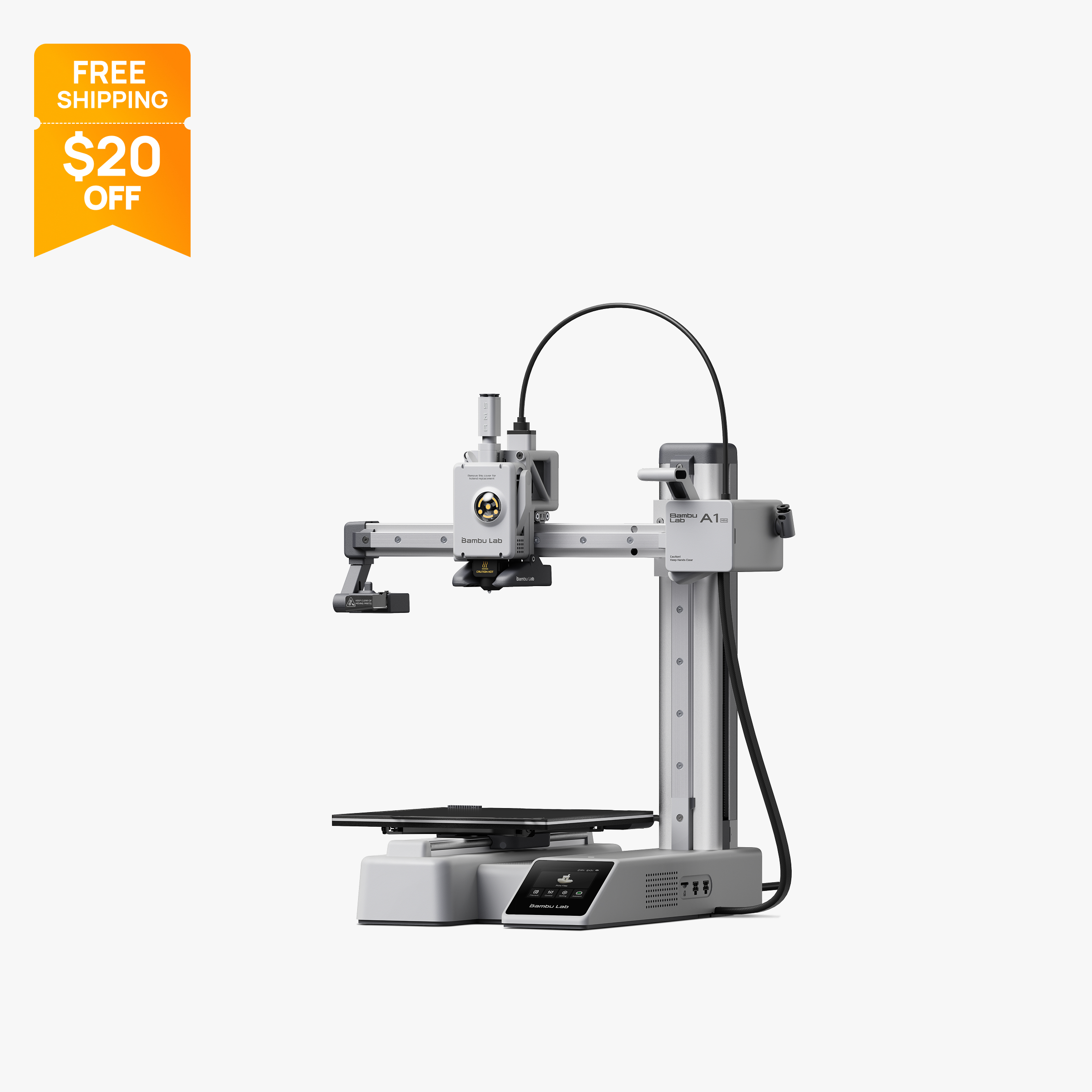
Compact 180 mm open-frame printer with 500 mm/s motion, 300 °C hot end and optional AMS Lite.
$199
Entry-level Ender with CR Touch auto leveling, 250 mm/s top speed and a 220 x 220 x 250 mm bed for $179.
$179
Entry-level resin printer with a 6.6 in 4K mono LCD, 35 µm XY resolution and one-click auto leveling.
$184
Comparison table
| Spec | Bambu Lab A1 Mini | Creality Ender 3 V3 SE | Elegoo Mars 5 |
|---|---|---|---|
| Type | FDM | FDM | resin |
| Price | $199 | $179 | $184 |
| Build volume | 180×180×180 mm | 220×220×250 mm | 153×77×165 mm |
| Max speed | 500 mm/s | 250 mm/s | Not listed |
| Multicolor | Yes (AMS Lite (optional, up to 4 colors)) | No | No |
| Enclosed | No | No | Yes |
| Auto bed leveling | Yes | Yes | Yes |
| Connectivity | Wi-Fi, Bambu-Bus, microSD | SD card | USB |
| Noise | Not listed | Not listed | Not listed |
| Release year | 2023 | 2023 | 2024 |
How we chose
Only three printers in our database had a verified price under $200 on an official US store at the time of writing (October 2026), and two of the three are there because of sales. We ranked them on what you can check in published specs: automatic leveling, Wi-Fi or app control, build volume, hotend temperature and rated speed, and for resin, LCD resolution. We also note the regular price for each, because two of the three cost more than $200 when the sale ends.
We would rather list three honest picks than pad the page. These rankings use manufacturer specs and official prices, not lab tests. See About Us for how we work.
What $200 buys in 2026
Under $200 you can get a real, modern printer with automatic bed leveling and a usable build volume. What you cannot get is an enclosure, a multicolor feeder in the box, or high-temperature materials like ABS and ASA. You also give up some combination of build size, speed and Wi-Fi depending on which printer you pick.
Here is the short version:
- The Bambu Lab A1 mini trades build size for automation, speed and Wi-Fi.
- The Creality Ender-3 V3 SE trades speed and Wi-Fi for a bigger bed and the lowest price.
- The Elegoo Mars 5 is a resin printer for small, detailed parts, with extra costs for resin and post-processing.
If none of those tradeoffs work for you, the next step up is small. See our best 3D printers under $300 or our value-focused budget picks.
The picks
1. Bambu Lab A1 mini: best 3D printer under $200
The A1 mini is the most capable printer you can buy under $200 right now, as long as the sale holds. It levels the bed automatically, so much of the first-layer fiddling that slows down most cheap printers is mostly gone. It connects over Wi-Fi to Bambu Studio and Bambu's app, and it has run-out, tangle and filament odometry sensors plus power loss recovery.
Bambu rates it at 500 mm/s with 10,000 mm/s² acceleration, the same figures as the full-size A1, and its 300°C hotend has headroom for PLA, PETG and TPU. The compact 347 x 315 x 365 mm frame and 5.5 kg weight fit a small desk. Maximum power draw is listed at 150 W.
The catch is size. The 180 x 180 x 180 mm build volume is the smallest here, so larger models must be split into parts. The bed reaches 80°C, and Bambu lists ABS, ASA, PC and PA as not recommended. The 2.4-inch screen is small, so you will mostly control it from the app or slicer.
It also has an upgrade path. You can add an AMS Lite later for up to 4 colors, and the A1 mini Combo with the AMS Lite included is $299 (regular $329).
At the time of writing (October 2026) the A1 mini is $199 on Bambu's US store. The regular price is $219, so it is under $200 only on sale. See the Bambu Lab A1 mini page.
2. Creality Ender-3 V3 SE: best under $200 for build size
The Ender-3 V3 SE is the one printer here that stays under $200 even at its regular price. It gives you a 220 x 220 x 250 mm build volume, noticeably more room than the A1 mini, so storage bins, cosplay parts and taller models fit in one piece more often.
Leveling is automatic: a CR Touch probe maps the bed and a strain sensor sets Z-offset. The Sprite direct extruder is listed by Creality for PLA, PETG and TPU, and Creality lists a printing accuracy of plus or minus 0.1 mm. The plain Cartesian design is easy to understand and to repair, which helps if you want to learn how printers work.
The tradeoffs are clear. It is rated at 250 mm/s and 2,500 mm/s², about half the A1 mini's top speed and a quarter of its acceleration. There is no Wi-Fi, so files move by SD card. The hotend tops out at 260°C, the screen is a basic 3.2-inch knob display, and there is no camera.
At the time of writing (October 2026) it is $179 on Creality's US store, regular $199. See the Creality Ender-3 V3 SE page, and our Ender-3 V3 vs A1 mini comparison covers the Ender-3 V3 family against the A1 mini.
3. Elegoo Mars 5: best resin 3D printer under $200
If you want miniatures, game pieces or jewelry-scale detail, a resin printer gives a smoother surface than any filament printer at this price. The Mars 5 uses a 6.6-inch 4K mono LCD (4098 x 2560) for 35 µm XY resolution, and Elegoo lists one-click self-check and auto leveling, which removes the manual paper-leveling step common on older resin printers.
It is compact enough for a small, ventilated corner, and Elegoo sells a replacement 4K LCD for it directly, so the main wear part is easy to source.
The limits matter. The small screen limits plate area, so large models or big batches need several runs. Elegoo does not publish a print speed or build volume on its store page, and the page lists no Wi-Fi, camera or tilt release. The Mars 5 Ultra adds 18 µm detail and an AI camera for more money, and Tom's Hardware describes a tilt release on it.
Resin also adds running costs the sticker does not show: resin, nitrile gloves, isopropyl alcohol, a wash container and UV curing. Formlabs' safety guidance recommends gloves and avoiding skin contact with uncured resin.
At the time of writing (October 2026) it is $184 on Elegoo's US store. The regular price is $225, so it fits under $200 only on sale. See the Elegoo Mars 5 page and our FDM vs resin guide.
What to look for in a 3D printer under $200
Automatic leveling is non-negotiable. All three picks level themselves. Older or cheaper printers that need manual paper leveling cost you time and failed prints, and that cost adds up quickly when you are learning.
Decide between size and convenience. The two FDM picks split cleanly. The A1 mini has Wi-Fi, faster motion and more automatic calibration in a 180 mm cube. The Ender-3 V3 SE has a 220 x 220 x 250 mm volume but slower motion and no Wi-Fi. If most of your prints are small, the A1 mini is the better fit. If you keep hitting the 180 mm limit, the Ender gives you room.
Stick to easy materials. Under $200 you are buying a PLA, PETG and TPU printer. None of these picks is enclosed, and Bambu lists ABS and ASA as not recommended on the A1 mini. If you need those materials, budget for an enclosed printer; see our best enclosed 3D printers.
Check the regular price. Sales are what put the A1 mini and Mars 5 under $200. If you are reading this after a sale ends, the Ender-3 V3 SE may be the only printer left at this price. Prices change, so confirm on the official store.
Plan for consumables. FDM printers need filament, and it should be kept dry; Bambu's wiki explains how to dry filament that has absorbed moisture. Resin printers need resin, gloves, alcohol, curing and eventually a new release film and LCD.
Buy from the official store. Every price on this page comes from the maker's own US store, and makers also sell spare parts directly, such as Elegoo's replacement Mars 5 LCD. Third-party listings can differ in bundle contents and price.
Running costs under $200
The printer price is only part of what you spend. For the two FDM picks, filament is the ongoing cost. Keep spools sealed or dry, because filament that absorbs moisture prints with strings and rough surfaces; Bambu's wiki explains how to dry it. Over time you may also replace a nozzle or a build plate.
For the Mars 5, running costs are higher than the sticker suggests. Each print uses liquid resin, and finished parts must be washed in isopropyl alcohol or a cleaning solution, then cured under UV light. You will also need nitrile gloves and good ventilation, and the release film and LCD wear out with use. Formlabs' resin safety guidance covers safe handling and disposal of uncured resin. If you only want a few prints a month, those extras can cost more than the printer in the first year, so be sure resin is the right fit.
Which one should you buy?
- Buy the A1 mini if most of your prints are small, you want Wi-Fi and phone control, and you can buy while the $199 sale lasts. It is the most automated printer here.
- Buy the Ender-3 V3 SE if you need more build height and width, are happy to move files by SD card, or want a printer that stays under $200 at its regular price.
- Buy the Mars 5 if you want miniatures, tabletop figures or jewelry-scale detail and are ready for resin handling and post-processing.
If you are buying for a young child rather than for yourself, a tap-to-print toy printer may suit better than any of these. See our best 3D printers for kids.
Who should skip this price range
A sub-$200 printer is not the right buy for everyone. Skip it if:
- You need ABS or ASA. These materials want an enclosure, and none of the picks here has one. The enclosed Bambu Lab P1S is $349 at the time of writing (October 2026).
- You want multicolor from day one. The cheapest multicolor setup we track is the A1 mini Combo at $299 on sale.
- You print large parts often. Helmets and big storage bins outgrow a 180 mm or 220 mm bed quickly. See our large-format picks.
- You run a classroom or shop. Wired networking, cameras and filtration matter more there; our best 3D printers for small business covers those needs.
For everyone else, especially first-time buyers printing PLA models, gifts and household fixes, these three printers cover the basics well.
Is it worth spending a little more?
Often, yes. The full-size Bambu Lab A1 is $259 at the time of writing (October 2026), regular $299, and gives you a 256 x 256 x 256 mm build volume and Bambu says it calibrates Z-offset, bed level, vibration and nozzle pressure automatically before every print. The Elegoo Neptune 4 Pro is $239 with Klipper firmware and a 300°C hotend. On the resin side, the Mars 5 Ultra is $284 with 18 µm detail and a camera.
If $200 is a hard ceiling, the three picks above are good printers. If you can stretch, compare them with our under $300 list and our guide to the cheapest 3D printers before you buy.
What changed this update
We cut this list to printers with a verified official price under $200. The Creality Ender-3 V3 is no longer purchasable on Creality's US store (it shows as sold out), and Creality now lists the newer Ender-3 V4 as its next-gen Ender, without calling it a direct replacement. Prices were checked on 2026-10-28, and we now note the regular price for printers that fit under $200 only on sale.
Frequently asked questions
What is the best 3D printer under $200?
The Bambu Lab A1 mini is our top pick at $199 on sale at the time of writing (October 2026). It has automatic bed leveling, Wi-Fi and a 500 mm/s rating, but a small 180 x 180 x 180 mm build volume. Its regular price is $219, so it fits under $200 only on sale.
Can you get a good 3D printer under $200?
Yes. At the time of writing (October 2026), three printers with automatic leveling are under $200 on official stores: the Bambu Lab A1 mini, the Creality Ender-3 V3 SE and the Elegoo Mars 5 resin printer. None are enclosed, so they suit PLA, PETG and TPU, or resin for the Mars 5.
Which 3D printer under $200 has the biggest build volume?
The Creality Ender-3 V3 SE has a 220 x 220 x 250 mm build volume, compared with 180 x 180 x 180 mm on the Bambu Lab A1 mini. It is $179 at the time of writing (October 2026), regular $199, so it stays under $200 even off sale.
Is a resin printer under $200 worth it?
The Elegoo Mars 5 gives 35 micron XY detail from a 6.6-inch 4K LCD for $184 on sale at the time of writing (October 2026). It suits miniatures and small models. Budget extra for resin, gloves, alcohol and UV curing, which the printer price does not include.
What do you give up with a 3D printer under $200?
You give up an enclosure, high-temperature materials like ABS and ASA, and a built-in multicolor system. Depending on the model, you also trade away build size, speed or Wi-Fi. Spending $259 gets you the full-size Bambu Lab A1.
Sources
- Bambu Lab A1 mini tech specs (official)
- Creality US store, Ender-3 V3 SE (official)
- Elegoo Mars 5, US store product page (official)
- Resin Safety and Resin Terms FAQ (Formlabs)
- Dry filament (Bambu Lab Wiki)
- Creality Ender-3 V4 product page (official)
- Bambu Lab A1 mini on the official US store (price)
- Bambu Lab US store 3D printer collection (lineup and buying guidance)
- Creality Ender-3 V3 SE product page (official)
- Creality Ender-3 V3 SE support and specifications (official)
- Elegoo Mars 5, US store product data (official)
- Elegoo LCD screen for Mars 5 (official store)
- Tom's Hardware: Elegoo Mars 5 Ultra review