Bambu Lab P1S vs Bambu Lab X1 Carbon
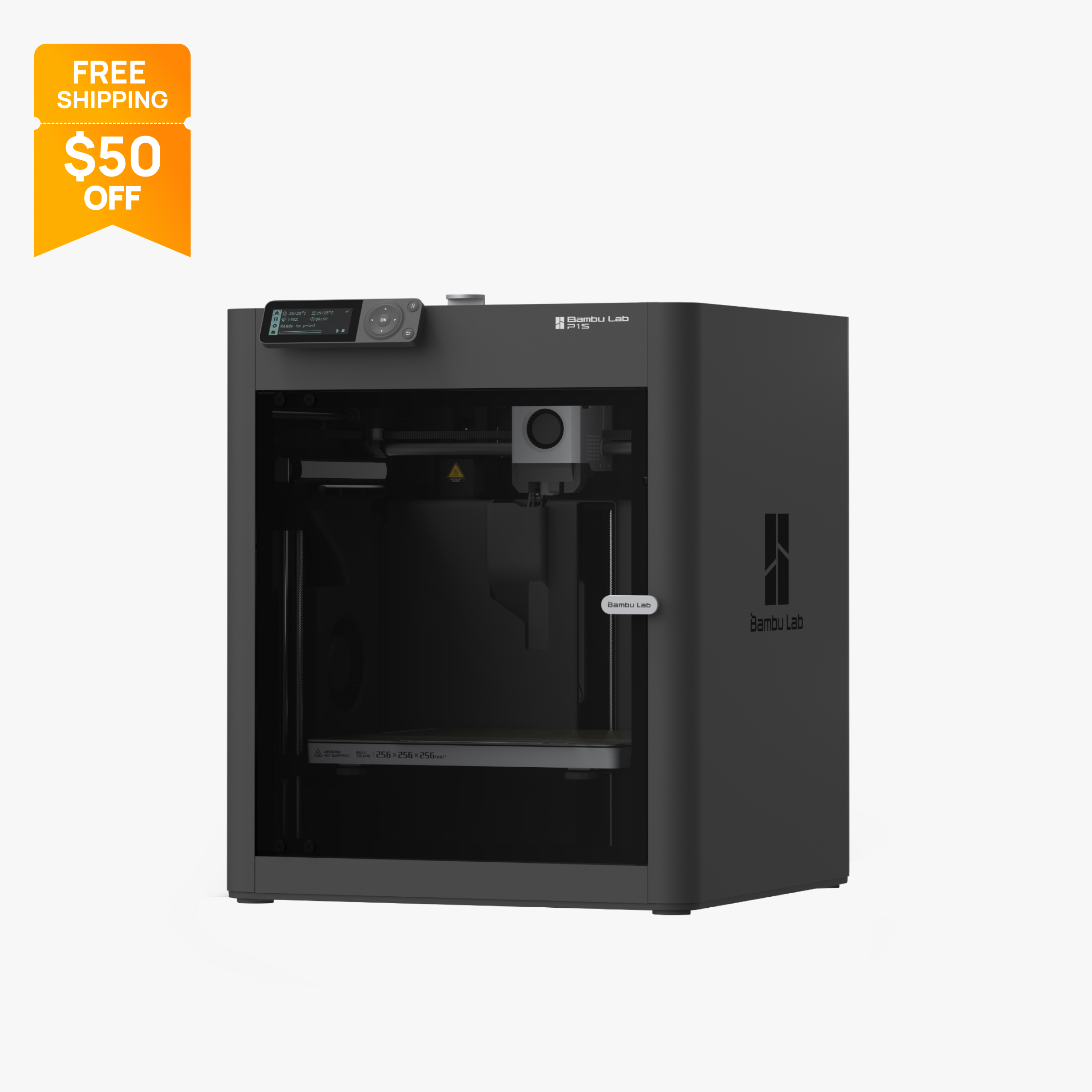
Verdict
The X1 Carbon is end of life and no longer sold new, so this comparison suits used buyers and current owners. A used X1 Carbon offers a hardened steel nozzle, 5-inch touchscreen and lidar; the P1S is still sold, has no announced end of life and is the lower-risk new purchase. New buyers wanting hardened hardware should look at the P2S or X2D.
Specs side by side
| Spec | Bambu Lab P1S | Bambu Lab X1 Carbon |
|---|---|---|
| Type | FDM | FDM |
| Price | $349 | Check current price |
| Build volume | 256×256×256 mm | 256×256×256 mm |
| Max speed | 500 mm/s | 500 mm/s |
| Multicolor | Yes (AMS or AMS 2 Pro (optional, up to 16 colors with 4 units)) | Yes (AMS (optional)) |
| Enclosed | Yes | Yes |
| Auto bed leveling | Yes | Yes |
| Connectivity | Wi-Fi, Bluetooth, Bambu-Bus, microSD | Wi-Fi, Bambu-Bus, microSD |
| Noise | 48 dB | Not listed |
| Release year | 2023 | 2022 |
Quick answer
The Bambu Lab X1 Carbon is no longer sold new: Bambu announced end of life for the X1 series on March 31, 2026, and the old X1 Carbon page on its US store now redirects to the printer collection. This page is still useful if you are comparing used units, deciding whether to upgrade from an X1 Carbon, or reading older reviews. On specs, the X1 Carbon has a hardened steel nozzle, a 5-inch touchscreen and a lidar sensor, while the P1S is still sold, costs less and lacks those parts. If you are buying today, the practical choice is the P1S or a newer Bambu model, not a new X1 Carbon.
Key differences
Availability and support timeline
The biggest difference is no longer a spec. Bambu announced that the X1 series (X1, X1 Carbon and X1E) reached end of life on March 31, 2026, which ended manufacturing and active sales. The company's published timeline says firmware bug fixes and feature updates continue until May 31, 2027, security patches until May 31, 2029, and spare parts and support until March 31, 2031. Bambu also warns that some spare parts may sell out before the 2031 date.
The P1S has no such announcement. On October 28, 2026 it was listed and in stock on Bambu's US store, and Bambu has not announced an end of life for it. That makes the P1S the safer long-term purchase if you want a printer that will keep receiving feature updates.
For a used X1 Carbon, the timeline means you can expect Bambu support for years, but feature updates have a defined end. That is a reasonable tradeoff if the price is right, though it is a reason to be careful about paying near the P1S's current price for a used unit.
Hardened steel nozzle and filament support
This is where the X1 Carbon justifies its premium. It ships with a hardened steel nozzle and extruder gears, and Bambu's spec sheet rates carbon fiber and glass fiber reinforced polymers, along with PA and PC, as ideal. The P1S ships with a stainless steel nozzle, and Bambu says fiber-reinforced filaments are not recommended on it until the extruder and hot end are upgraded.
Both printers are enclosed, which Bambu lists as suiting ABS and ASA on the P1S. The difference shows up with abrasive filaments: if you know you want carbon fiber filled nylon or PLA-CF, the X1 Carbon needs no upgrade, while the P1S does. Neither has an active chamber heater, so PA and PC are about as capable as an unheated enclosure allows. Bambu's newer printers address this with a heated chamber, covered below.
Screen, lidar and camera
The X1 Carbon has a 5-inch, 1280 x 720 touchscreen, while the P1S has a 2.7-inch button-driven screen. If you want to start prints, adjust settings and manage filament at the printer, the X1 Carbon is the more comfortable machine. The P1S pushes most control to the Bambu app or Bambu Studio.
The X1 Carbon also carries Bambu's micro lidar sensor and a 1080p chamber camera, which support automated print monitoring features. The P1S has a chamber camera that records at 0.5 fps, which suits timelapse but not smooth live monitoring. If remote monitoring matters to you, the X1 Carbon has the stronger hardware.
Whether those extras matter depends on your habits. Someone who starts long prints and checks the app from elsewhere gets more from better sensing, and someone who prints short jobs while nearby may not notice the difference.
Speed, acceleration and build volume
On the headline numbers the two are the same. Both list a 256 x 256 x 256 mm build volume, 500 mm/s top speed, 20,000 mm/s² acceleration and a 300 °C maximum nozzle temperature. Both use CoreXY motion with an enclosed chamber, so print times on typical parts should be similar, subject to slicer settings.
One difference is the bed: Bambu's official spec sheet lists the X1 Carbon's maximum bed temperature at 110 °C on 220 V and 120 °C on 110 V (US units), while the P1S is listed at 100 °C. That is a modest edge: it gives the X1 Carbon a little more headroom on bed-heat-hungry materials.
Note the P1S default: Bambu Studio sets the printable height to 250 mm to protect the heatbed, and using the full 256 mm needs steps from Bambu's wiki.
Multicolor and connectivity
Both printers work with Bambu's AMS. The P1S supports AMS and AMS 2 Pro and, per Bambu, up to four units for as many as 16 colors in one print. The X1 Carbon lists AMS as optional and supports it, and the spec sheet lists filament odometry as optional with AMS.
Connectivity is Wi-Fi, Bambu-Bus and microSD on the X1 Carbon, and the P1S adds Bluetooth. Both work with Bambu Studio and, for the P1S, Bambu says third-party slicers that export standard G-code are supported with some advanced features missing.
Buying a used X1 Carbon
Because the X1 Carbon is gone from Bambu's US store, any purchase now is either a used unit or leftover stock from a third party. Bambu's published dates give you a framework for judging a deal. Feature updates continue until May 31, 2027, so a unit bought today gets roughly seven months of new features. Security patches run to May 31, 2029, and spare parts and support to March 31, 2031. Bambu also says some spare parts may sell out before that date, so ask what condition the hot end, extruder and build plate are in rather than assuming you can buy replacements indefinitely.
Because there is no official current price, compare any used listing with the P1S at $349 on sale. A used X1 Carbon makes the most sense when the seller is asking well below that, because a new P1S comes with ongoing support and a known purchase history. Check that the printer is a genuine X1 Carbon, ask for the order date, and confirm that the AMS (if included) is working, since the AMS is a separate part with its own wear.
Should an X1 Carbon owner upgrade?
If you already own an X1 Carbon, the end-of-life notice does not stop it from working. You keep a printer with a hardened steel nozzle, lidar and a 5-inch touchscreen, and Bambu has committed to updates and parts for years. The case for upgrading is narrower: you want active chamber heating, a dual-nozzle setup or higher speeds, all of which Bambu's newer X2D lists. In that case compare the X2D's published specs with what you print now.
Moving from an X1 Carbon down to a P1S would lose hardware you already have, so it only makes sense if you are selling the X1 Carbon for cash and your prints are mostly PLA and PETG.
The newer alternatives
If the X1 Carbon's features appeal to you, Bambu has newer machines. Its end-of-life post does not name a successor, but the X2D store page calls the X2D "X1C's next chapter." Per Bambu's official specs, the X2D is a dual-nozzle printer with a 256 x 256 x 260 mm main nozzle volume, 1000 mm/s top speed, 20,000 mm/s² acceleration, a 120 °C bed and active chamber heating to 65 °C. For a cheaper step up from the P1S, Bambu also sells the P2S, with a hardened steel 300 °C nozzle, 110 °C bed, 600 mm/s and a 5-inch touchscreen.
Price and what you get
At the time of writing (October 2026), the P1S is $349 on sale (regular $399) on Bambu's US store. The P1S AMS Combo is $479 and the P1S AMS 2 Pro Combo is $509. There is no current official price for the X1 Carbon because it is no longer sold, so we are not quoting one. For used units, compare against the P1S price above and weigh Bambu's support dates.
Among the newer models, the P2S is $449 on sale (regular $549) on Bambu's US store. Bambu also sells the X2D in several bundles, and its price differed between Bambu's own store pages when checked, so look at the X2D store page for current pricing. Check the store before buying, since sale prices change.
Who should buy which
Consider a used X1 Carbon if:
- You want carbon fiber and glass fiber support without upgrading a nozzle.
- You value the 5-inch touchscreen and the lidar and camera hardware.
- You can find one at a clear discount, and accept the 2027 feature update and 2031 parts dates.
Buy the P1S if:
- You want a printer that is still sold new and has no announced end of life.
- You mostly print PLA, PETG, ABS and ASA.
- You want to keep costs down and can add a hardened nozzle later if needed.
Existing X1 Carbon owners do not need to upgrade just because of the end-of-life notice, since Bambu has committed to updates and parts for years.
Also consider
- The newer Bambu P2S and X2D if you want hardened hardware or a heated chamber on a current model.
- The Creality K1C, an enclosed CoreXY printer with a hardened steel nozzle at $499 on sale.
- The Prusa Core One, which has a heated chamber; see Prusa Core One vs P1S.
For more, read best enclosed 3D printers, best 3D printers under $500 and our A1 vs P1S comparison.
Frequently asked questions
Is the Bambu Lab X1 Carbon discontinued?
Yes. Bambu announced that the X1 series reached end of life on March 31, 2026, ending manufacturing and active sales. The old X1 Carbon page on the US store now redirects to the printer collection.
How long will the X1 Carbon be supported?
Bambu's timeline is firmware bug fixes and feature updates until May 31, 2027, security patches until May 31, 2029, and spare parts and support until March 31, 2031. Bambu notes some parts may sell out earlier.
What is the difference between the P1S and the X1 Carbon?
Both are enclosed CoreXY printers with a 256 mm cube, 500 mm/s and 20,000 mm/s². The X1 Carbon adds a hardened steel nozzle, a 5-inch touchscreen, micro lidar and a 1080p camera, while the P1S has a stainless steel nozzle and a 2.7-inch screen.
Is a used X1 Carbon better than a new P1S?
It depends on price and needs. The X1 Carbon prints carbon fiber filament without upgrades, but its feature updates end in May 2027 and new units are no longer sold. The P1S is $349 on sale at the time of writing (October 2026) and remains in production.
What replaced the X1 Carbon?
Bambu's end-of-life post does not name a successor, but the X2D store page calls the X2D "X1C's next chapter." The X2D is dual-nozzle with active chamber heating to 65 °C, and Bambu sells it in several bundles on its US store.
Can the P1S print carbon fiber filament?
Not on stock hardware. Bambu says fiber-reinforced filaments are not recommended on the P1S until the extruder and hot end are upgraded, since it ships with a stainless steel nozzle. The X1 Carbon ships with a hardened steel nozzle.
Sources
- The X1 series is EOL (official Bambu Lab blog)
- X1 series EOL announcement and support timeline (official Bambu Lab forum)
- Bambu Lab X1 Carbon technical specifications PDF (official)
- Bambu Lab P1S on the official US store (price, parameters, FAQ)
- Bambu Lab P1S technical specifications PDF (official)
- Bambu Lab US store 3D printer collection (lineup and prices)
- Bambu Lab X2D technical specifications (official)
- Bambu Lab X2D on the official US store (price, FAQ)
- Bambu Lab P2S technical specifications (official)
- Bambu Lab P2S on the official US store (price)