Anycubic
China · Founded 2015
Anycubic makes desktop FDM printers (the Kobra line) and resin printers (the Photon line), plus filament, resin and wash and cure stations. It was founded in 2015.
Who they are
Anycubic is a Chinese maker of desktop 3D printers. In an interview with All3DP, the company said it was founded in September 2015. Its official store describes Anycubic as "a manufacturer of high-performance desktop 3D printers and accessories", and its About page lists the company name Hongkong Anycubic Technology Co., Limited, with a Hong Kong address. The catalog covers filament (FDM) printers under the Kobra name, resin printers under the Photon name, wash and cure machines, refurbished units, filament, resin and replacement parts. The store also points buyers to Makeronline, Anycubic's free model platform.
Anycubic is one of the few brands on this site that sells both FDM and resin machines at consumer prices, so it shows up in our multicolor and resin buying guides alike.
The current lineup on this site
Every Anycubic printer with a page on 3DPrinterLab, with its status when we checked the official store in late October 2026. Prices are at the time of writing (October 2026).
- Anycubic Kobra 4 Combo: sold. $379 for the 4-color Combo on store.anycubic.com.
- Anycubic Kobra S1 ACE 2 Pro Combo: sold. $499 for the 4-color bundle.
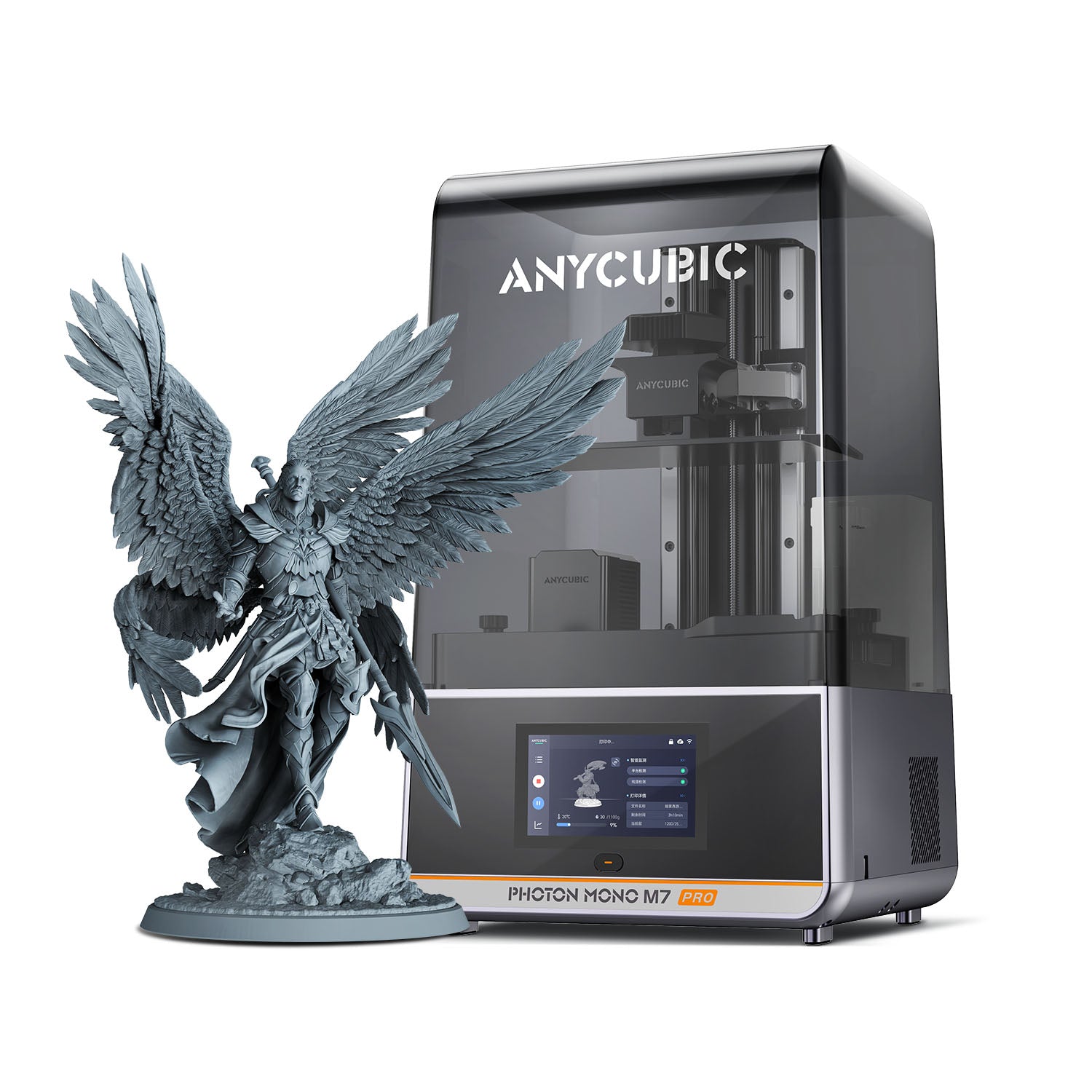
- Anycubic Photon Mono M7 Pro: sold. $489 on the official store.
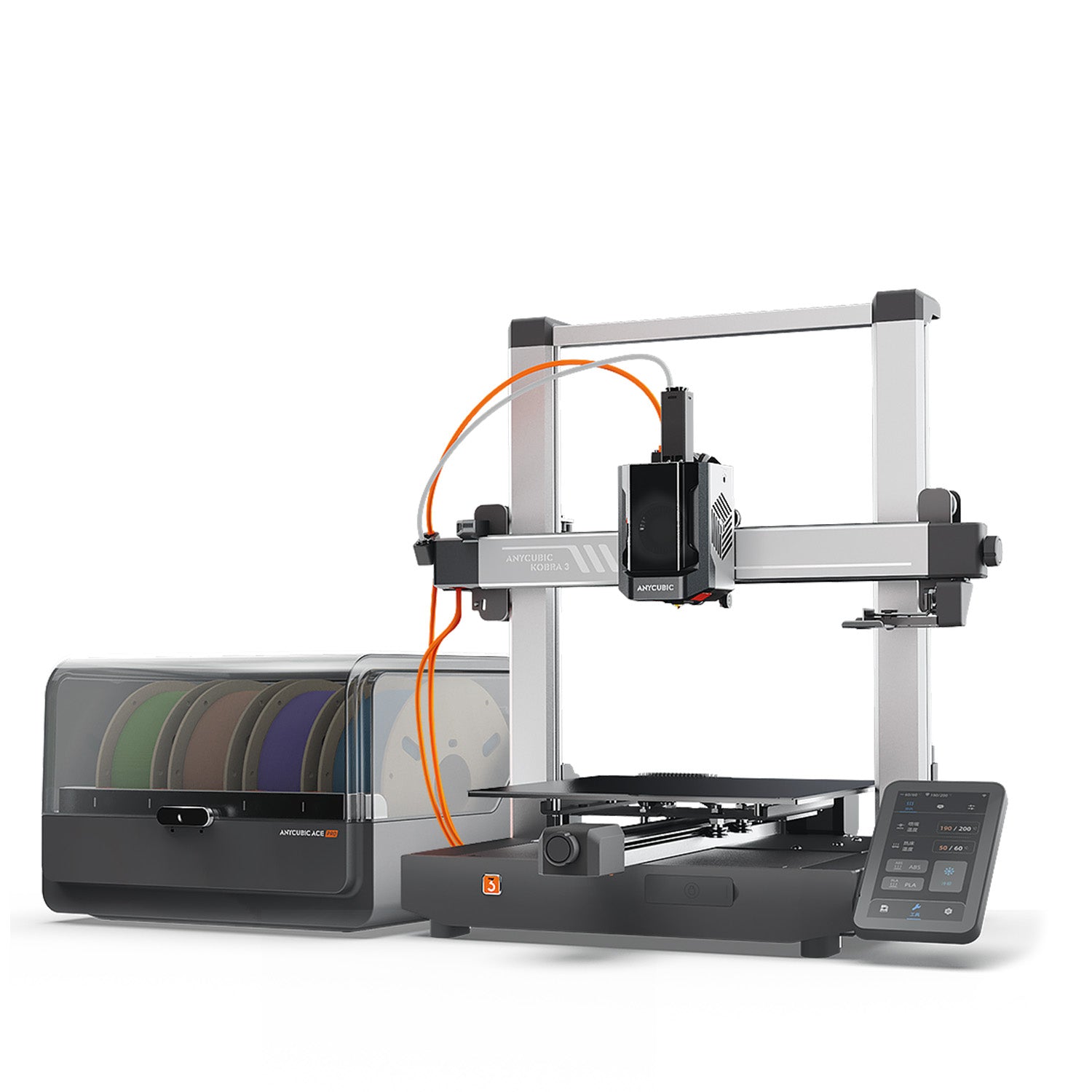
- Anycubic Kobra 3 Combo: no longer sold new in practice. The official store lists it as sold out and says orders placed while it is out of stock receive a Kobra 4 Combo. Anycubic has not formally called it discontinued.
- Anycubic Kobra S1 Combo: no longer sold new in practice. Every variant is marked unavailable, and the store now sells the Kobra S1 ACE 2 Pro Combo, which its page calls the "Kobra S1 Combo Enhanced Version".
What the lineup is built around
Anycubic's FDM range splits into two body styles.
- Open-frame Kobra Combos. The Kobra 3 Combo and Kobra 4 Combo are open-frame printers with a moving bed. Both ship with Anycubic's ACE filament unit for four-color printing: the ACE Pro on the Kobra 3 Combo and the ACE 2 Pro on the Kobra 4 Combo, which can reach eight colors with a second unit. Build volumes are 250 x 250 x 260 mm (Kobra 3 Combo) and 260 x 260 x 260 mm (Kobra 4 Combo), with a 300 °C maximum nozzle temperature.
- Enclosed Kobra S1. The Kobra S1 Combo and its ACE 2 Pro successor are enclosed CoreXY printers with a 250 x 250 x 250 mm build volume, a 320 °C nozzle and a 120 °C bed. The enclosure makes them a better match for ABS and ASA than the open-frame models. Anycubic says the ACE 2 Pro version can reach up to 16 colors with multiple units.
- Photon resin printers. The Photon Mono M7 Pro uses a 10.1 inch 14K monochrome LCD (13320 x 5120) with a stated 16.8 µm XY resolution and a 223 x 126 x 230 mm build volume. It connects over USB drive, Wi-Fi, LAN or the Anycubic app.
All current Kobra models are controlled through the Anycubic app, and the multicolor units are included in the Combo bundles rather than sold as an upgrade you add later.
Buying and support
Anycubic sells direct through store.anycubic.com, which shows USD prices to US and other buyers. When we checked, us.anycubic.com redirected to that store.
Anycubic's After-sales Service and Refund Policy says the complete machine carries a one-year warranty, excluding gifted and second-hand machines. Some parts have shorter coverage: the policy lists 3 months for FDM print heads, 6 months for FDM heated beds and glass plates, and 12 months for other main FDM components. You can return a product for your own reasons within 14 days of signing for it, and the policy asks you to contact customer service within 30 days of receipt for quality problems not caused by the user. Anycubic also runs a support wiki at wiki.anycubic.com.
Printers bought from other retailers follow that seller's return terms, so check before you buy from a marketplace listing.
What changed in 2026
2026 was a year of model swaps for Anycubic rather than formal discontinuations.
- The Kobra 4 Combo (released in 2026) effectively replaced the Kobra 3 Combo. The Kobra 3 Combo page itself says out-of-stock orders ship as a Kobra 4 Combo.
- The Kobra S1 ACE 2 Pro Combo took over from the original Kobra S1 Combo, pairing the same enclosed printer with the newer ACE 2 Pro unit.
- The Photon Mono M7 Pro stayed on sale. The store also lists a larger Photon Mono M7 Max, but Anycubic does not describe it as a replacement.
If you are comparing Anycubic's multicolor bundle with Bambu Lab's, see Kobra 3 Combo vs Bambu Lab A1 Combo and our best multicolor 3D printers. For resin options from several brands, see best resin 3D printers.
Anycubic printers


Frequently asked questions
Where is Anycubic from?
Anycubic is a Chinese 3D printer company. Its official About page lists the company name Hongkong Anycubic Technology Co., Limited, and the company told All3DP it was founded in September 2015.
What warranty does Anycubic offer on its printers?
Anycubic's after-sales policy gives the complete machine a one-year warranty, excluding gifted and second-hand machines. Some parts have shorter periods, such as 3 months for FDM print heads and 6 months for heated beds and glass plates.
Is the Anycubic Kobra 3 Combo discontinued?
Anycubic has not formally called it discontinued, but its official store lists the Kobra 3 Combo as sold out. The product page says orders placed while it is out of stock receive a Kobra 4 Combo instead.
Does Anycubic make resin printers?
Yes. Anycubic's resin printers are sold under the Photon name. The Photon Mono M7 Pro, for example, uses a 10.1 inch 14K monochrome LCD with a stated 16.8 µm XY resolution.
What is the difference between the Kobra 4 Combo and the Kobra S1 Combo?
The Kobra 4 Combo is an open-frame printer with a moving bed and a 260 mm cube build volume. The Kobra S1 models are enclosed CoreXY printers with a 250 mm cube build volume, a 320 °C nozzle and a 120 °C bed, which suits ABS and ASA better.
Sources
- All3DP: Interview with Anycubic (founding date)
- About Anycubic (official store)
- Anycubic After-sales Service & Refund Policy (official store)
- Anycubic policy wiki (official)
- Anycubic Kobra 4 Combo product page (official store)
- Anycubic Kobra 3 Combo product page (official store)
- Anycubic Kobra S1 ACE 2 Pro Combo product page (official store)
- Anycubic Photon Mono M7 Pro product page (official store)