Best Resin 3D Printers (2026)
The Elegoo Mars 5 Ultra is the best resin 3D printer for most people: 18 µm XY detail, tilt release, auto leveling and a camera for $284 at the time of writing. Larger, finer and professional options follow.
Updated October 28, 2026
Compact resin printer with a 7 in 9K mono LCD, 18 µm XY detail, 150 mm/h speed, AI camera and auto leveling.
$284
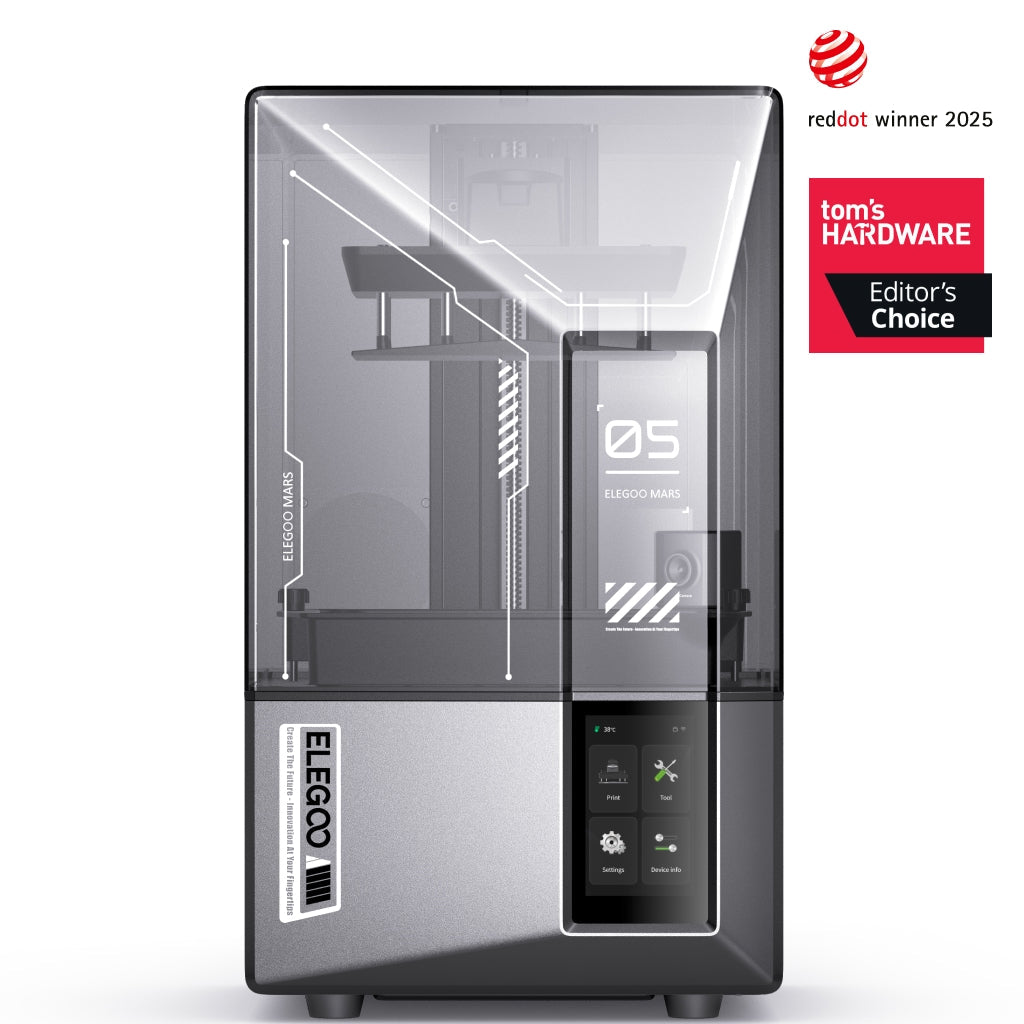
10 in 12K resin printer with a 218.88 x 122.88 x 220 mm build volume, tilt release and 150 mm/h speed.
$593.99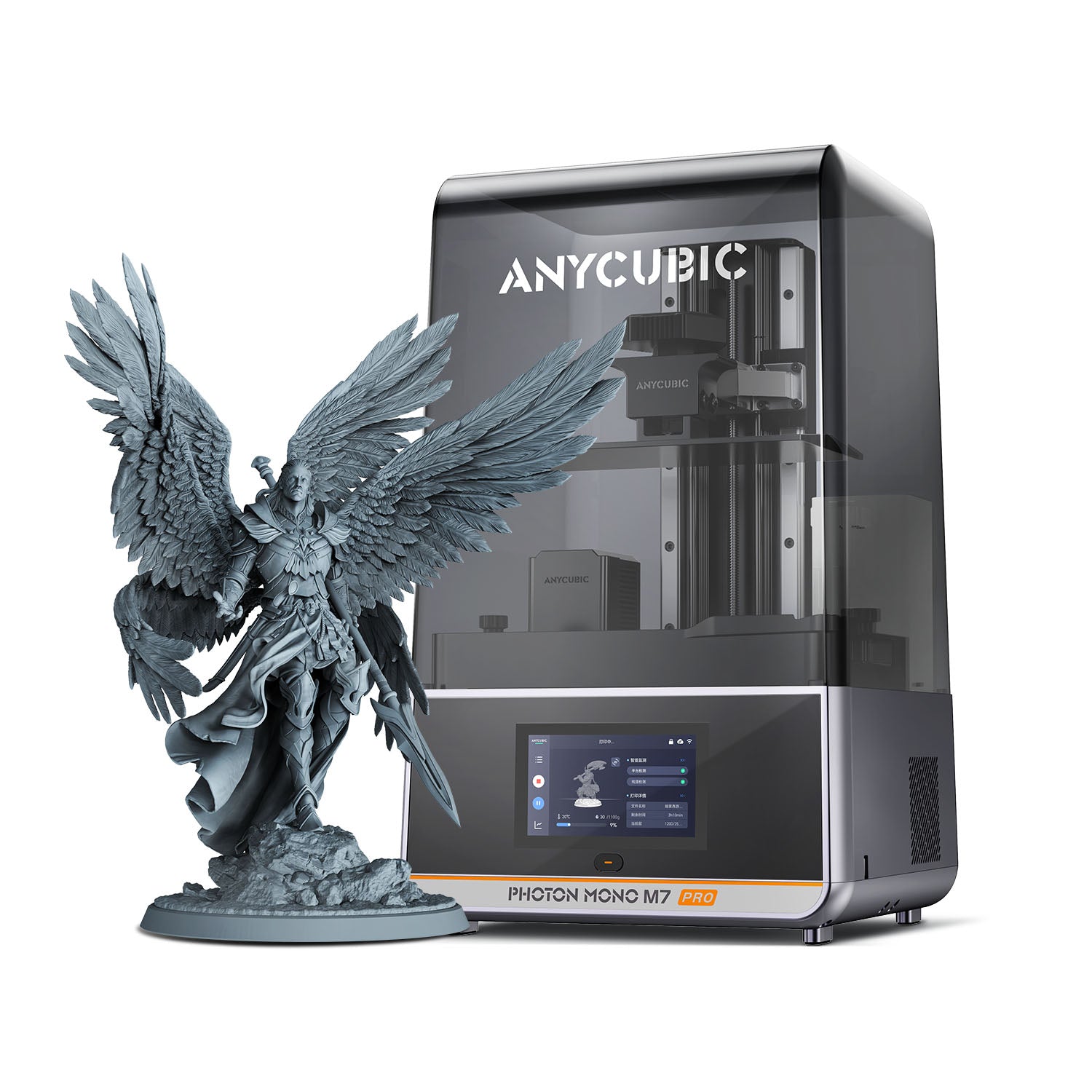
10.1-inch 14K mono resin printer with a 223 x 126 x 230 mm volume, heated vat and Wi-Fi
$489
Entry-level resin printer with a 6.6 in 4K mono LCD, 35 µm XY resolution and one-click auto leveling.
$184
Professional MSLA resin printer with 50 µm pixels, a 200 x 125 x 210 mm build and up to 100 mm/hour
$2,625
Comparison table
| Spec | Elegoo Mars 5 Ultra | Elegoo Saturn 4 Ultra | Anycubic Photon Mono M7 Pro | Elegoo Mars 5 | Formlabs Form 4 |
|---|---|---|---|---|---|
| Type | resin | resin | resin | resin | resin |
| Price | $284 | $593.99 | $489 | $184 | $2,625 |
| Build volume | 153×77×165 mm | 219×123×220 mm | 223×126×230 mm | 153×77×165 mm | 200×125×210 mm |
| Max speed | Not listed | Not listed | Not listed | Not listed | Not listed |
| Multicolor | No | No | No | No | No |
| Enclosed | Yes | Yes | Yes | Yes | Yes |
| Auto bed leveling | Yes | Yes | Yes | Yes | No |
| Connectivity | Wi-Fi, USB | Wi-Fi | USB drive, Wi-Fi, LAN, Anycubic app | USB | Wi-Fi (2.4/5 GHz), Ethernet, USB-C |
| Noise | Not listed | 45 dB | Not listed | Not listed | Not listed |
| Release year | 2024 | 2024 | 2024 | 2024 | 2024 |
How we chose
We ranked these resin printers on things you can check on a spec sheet and an official store page: XY pixel size and LCD resolution, build volume, release and leveling features, connectivity, and the official price at the time of writing (October 2026). Every pick is based on manufacturer specs and official store prices, not lab tests, and we only included resin printers currently listed for sale on the maker's own store. Where an independent review reported something useful, we say so and link it in the sources. Sale prices change often, so check the store before you buy. You can read more about how we work on our About Us page. If you are still deciding between filament and resin, start with our FDM vs resin guide.
The picks
1. Elegoo Mars 5 Ultra: best resin printer for most people
The Elegoo Mars 5 Ultra is a compact MSLA resin printer built around a 7 in 9K mono LCD with a resolution of 8520 x 4320. Elegoo lists that as 18 µm XY detail, which is fine enough for tabletop miniatures, jewelry masters and small figurines. Elegoo rates it at up to 150 mm/h, and a tilt release mechanism helps peel each layer from the film. Automatic leveling and a built-in AI camera for remote monitoring and failed-print detection round out a feature list that is unusual at this price.
It suits first-time resin buyers who want sharp detail without stepping up to a 10 in machine. The main tradeoff is plate area: the 7 in screen limits how many models fit in one run, and Elegoo's readable store pages do not list the build volume, so check the size of your largest model before you order. Tom's Hardware's review also reported that prints could be hard to remove from the laser-etched plate until first-layer exposure was reduced, and that the camera only spots a failure once the model rises above the vat edge.
At the time of writing (October 2026), Elegoo's US store lists the Mars 5 Ultra at $284 on sale (regular $338). Elegoo also sells a complete bundle with a Mercury XS wash and cure station, which is a simple way to buy the whole workflow at once. See the full Elegoo Mars 5 Ultra specs.
2. Elegoo Saturn 4 Ultra: best large-format resin printer
The Elegoo Saturn 4 Ultra steps up to a 10 in 12K mono LCD (11520 x 5120) with 19 x 24 µm pixels and a 218.88 x 122.88 x 220 mm build volume. That plate fits a full batch of miniatures or a tall bust in a single run, which is the main reason to choose it over a 7 in printer. Like the Mars 5 Ultra, it has tilt release, a rated top speed of 150 mm/h, automatic leveling and a built-in AI camera. Tom's Hardware gave it an Editor's Choice award, citing print detail, auto leveling and the tilting vat.
It suits users upgrading from a compact resin printer, small studios and anyone who prints many parts at once. The tradeoffs are running cost and pricing: a 10 in vat uses more resin per fill, and the non-square pixels mean detail is slightly coarser along one axis. Tom's Hardware also found the camera only detected an empty plate above about 50 mm.
At the time of writing (October 2026), the 12K model is $593.99 on Elegoo's US store, while the newer Saturn 4 Ultra 16K is listed at $649.99 on the same store. That gap is small, so compare both before ordering. See the Elegoo Saturn 4 Ultra specs or our Mars 5 Ultra vs Saturn 4 Ultra comparison.
3. Anycubic Photon Mono M7 Pro: best for fine detail in cold rooms
The Anycubic Photon Mono M7 Pro uses a 10.1 in 14K mono LCD (13320 x 5120) with a 16.8 x 24.8 µm XY pixel, the smallest XY figure among our picks. Its 223 x 126 x 230 mm build volume is similar to the Saturn 4 Ultra. The feature that sets it apart is vat heating from 20 to 40°C, which keeps resin viscosity more consistent in a cold garage or basement. Anycubic also lists USB, Wi-Fi and LAN file transfer with the Anycubic app, leveling-free setup, resin level detection and residue detection. It is rated at up to 170 mm/h with high-speed resin at 0.1 mm layers.
It suits hobbyists and small sellers who want fine detail and network printing in a 10 in class machine, especially if the printer will live somewhere unheated. The tradeoffs: the pixels are not square, Lychee Slicer support is listed as scheduled rather than available, and at 12.8 kg it needs a sturdy, level surface. Anycubic's Wash & Cure station and AirPure purifier are sold separately.
At the time of writing (October 2026), Anycubic's store lists the M7 Pro at $489 on sale (regular $669). Anycubic's US regional store could not be read, so check the price for your region. See the Anycubic Photon Mono M7 Pro specs.
4. Elegoo Mars 5: best budget resin printer
The Elegoo Mars 5 is the lowest-cost way into Elegoo's current resin lineup. It has a 6.6 in 4K mono LCD at 4098 x 2560, which Elegoo lists as 35 µm XY detail, plus one-click self-check and auto leveling that removes the manual paper-leveling step older resin printers needed. Its compact footprint fits a small desk or shelf, and Elegoo sells a replacement 6.6 in 4K LCD directly, so the main wear part is easy to source.
It suits first-time buyers who mainly print small models and want to keep the total under $200 for the printer. The tradeoffs are clear on the spec sheet: 35 µm is roughly twice the pixel size of the Mars 5 Ultra, the small screen limits plate area, and Elegoo's store page lists no tilt release, camera or Wi-Fi. Elegoo also does not publish a print speed or build volume for the base Mars 5 on its readable store pages.
At the time of writing (October 2026), Elegoo's US store lists the Mars 5 at $184 on sale (regular $225). If you can stretch to the Mars 5 Ultra, the extra money buys finer pixels, tilt release and a camera. See the Elegoo Mars 5 specs.
5. Formlabs Form 4: best professional resin printer
The Formlabs Form 4 is a professional resin printer for businesses, engineers, dental labs and jewelers. Formlabs calls its print engine Low Force Display (LFD), and its own spec table classes the technology as masked stereolithography (MSLA). The light path pairs a backlight of 60 LEDs and collimating lenses with an LCD that has a 50 µm pixel size, a microtextured release film and a flexible film tank that reduces peel forces. Formlabs publishes speeds up to 100 mm/hour and says most prints finish in under two hours.
The build volume is 200 x 125 x 210 mm, and the printer adds dual-band Wi-Fi, Ethernet, USB-C, a camera, built-in resin heating from 25 to 45 °C and Open Material Mode for third-party resins alongside Formlabs' own library. Its 50 µm pixel is larger than the consumer picks above, but Formlabs focuses on accuracy, consistency and a managed workflow rather than headline pixel counts.
The tradeoff is cost. At the time of writing (October 2026), the Basic Package is $2,625 on the Formlabs store, excluding sales tax, and it does not include wash and cure units; the Complete Package is $5,461. Biocompatible materials need the Form 4B instead. See the Formlabs Form 4 specs.
What to look for in a resin 3D printer
Compare XY pixel size, not the K number. A "12K" or "14K" label describes the LCD's pixel count, and the same count on a bigger screen produces bigger pixels. The XY figure in µm is the better comparison. Formlabs notes that resolution also depends on light collimation, uniformity, anti-aliasing and layer height, and that smaller pixels let less light through, which can slow printing. Check whether pixels are square: the M7 Pro (16.8 x 24.8 µm) and Saturn 4 Ultra (19 x 24 µm) are not.
Match the screen to your batch size. A 6.6 to 7 in printer handles a few miniatures or one small figure per run. A 10 in printer such as the Saturn 4 Ultra or M7 Pro fits full plates or tall busts, at the cost of more resin per vat fill.
Look at release and leveling. Tilt release (Mars 5 Ultra, Saturn 4 Ultra) and Formlabs' flexible film tank are both aimed at reducing the force on each layer as it separates. Auto leveling is now common on consumer machines, and all four consumer picks list leveling-free or automatic setup.
Think about temperature. Resin flows less easily when cold. The M7 Pro's vat heater and the Form 4's resin heating address this, and Formlabs specifies an 18 to 28 °C room for the Form 4.
Check connectivity and monitoring. Wi-Fi, LAN and a camera matter if the printer lives in a garage or spare room. The Mars 5 lists none of these; the Mars 5 Ultra, Saturn 4 Ultra and M7 Pro add network features.
Plan for consumables. Release film and the LCD screen wear over time on consumer MSLA printers, and Anycubic lists both as consumables. Buying from a maker that sells replacement screens, as Elegoo does for the Mars 5 series, makes repairs simpler.
MSLA vs Formlabs LFD
Every printer on this page cures a whole layer at once. In MSLA printing, an LCD masks light from an LED source so only the pixels that form the current layer let light through to the resin. That is why resin speed is quoted in mm/h of height rather than mm/s of travel.
Formlabs' LFD is its own version of this approach. It still uses an LCD, but Formlabs adds a high-power collimated backlight, a release texture that stops the tank from suctioning to the light unit, and a flexible film tank. The consumer picks use simpler optics and a standard release film. In practice, you are paying Formlabs for a tuned system, a large first-party materials library and fleet tools, not for smaller pixels.
Running costs: wash, cure and safety
The printer is only part of a resin setup. After printing, parts need washing to remove uncured resin, usually in isopropyl alcohol (IPA) or a comparable solvent, and most need post-curing with UV light. Elegoo sells a Mercury XS wash and cure station (bundled with the Mars 5 Ultra in one package), Anycubic sells a Wash & Cure station, and Formlabs offers Form Wash and Form Cure. Factor in resin, IPA, gloves, paper towels and replacement release film.
Formlabs' safety guidance is a good baseline for any brand. Wear gloves whenever you handle liquid resin or unwashed parts, because liquid resins are sensitizers and repeated skin contact can cause an allergy over time. Never pour resin down the sink; cure small amounts solid before disposal and follow local rules for larger amounts. IPA is flammable, so store it sealed and away from ignition sources, work in a well-ventilated area, and replace it once it is saturated with resin. Check each resin's safety data sheet for ventilation needs.
What changed this update
No resin picks were removed this time, because all five are listed as in stock on their makers' stores. Elegoo now sells the Saturn 4 Ultra 16K alongside the 12K model we list, and Anycubic sells the larger Photon Mono M7 Max but does not describe it as a replacement for the M7 Pro. If you mainly paint tabletop figures, see our best 3D printers for miniatures, and for bigger functional parts look at the best 3D printers for beginners.
Frequently asked questions
What is the best resin 3D printer for beginners?
The Elegoo Mars 5 Ultra is a strong first resin printer because it combines 18 µm XY detail with auto leveling, tilt release and a camera. At the time of writing (October 2026) it is $284 on Elegoo's US store. If your budget is tighter, the Mars 5 costs $184 but has coarser 35 µm pixels and no Wi-Fi or camera.
Is a resin 3D printer better than an FDM printer?
Resin printers produce finer surface detail on small parts such as miniatures and jewelry, because an LCD cures each layer with pixels measured in microns. FDM printers handle larger parts, cost less to run and do not need washing and curing. Most people who print functional parts are better served by FDM.
What else do I need besides the resin printer?
You need resin, nitrile gloves, a wash solvent such as isopropyl alcohol, and a way to post-cure parts with UV light. Many buyers add a combined wash and cure station, such as Elegoo's Mercury XS or Anycubic's Wash & Cure. Replacement release film is a regular consumable.
Are resin 3D printers safe to use at home?
They can be used at home with precautions. Liquid resin is a skin sensitizer, so wear gloves, keep it off your skin and work in a ventilated space. Isopropyl alcohol is flammable, and uncured resin should never go down the drain.
What does 12K or 14K mean on a resin printer?
It describes the pixel count of the LCD, not the detail on its own. A 14K screen on a 10 in printer and a 9K screen on a 7 in printer can produce similar pixel sizes. Compare the XY resolution in µm instead, and check whether the pixels are square.
How fast are resin 3D printers?
Resin speed is measured in vertical mm per hour because a whole layer cures at once. Elegoo rates the Mars 5 Ultra and Saturn 4 Ultra at up to 150 mm/h, Anycubic rates the M7 Pro at up to 170 mm/h with high-speed resin, and Formlabs lists up to 100 mm/hour for the Form 4.
Sources
- Elegoo Mars 5 Ultra, US store product page (official)
- Elegoo Mars 5 Ultra Complete Bundle with Mercury XS, US store (official)
- Tom's Hardware: Elegoo Mars 5 Ultra review
- Elegoo Saturn 4 Ultra 12K, US store product page (official)
- Elegoo Saturn 4 Ultra 16K, US store (official)
- Tom's Hardware: Elegoo Saturn 4 Ultra review
- Anycubic Photon Mono M7 Pro product page (official store)
- Elegoo Mars 5, US store product page (official)
- Elegoo LCD screen for Mars 5 (official store)
- Formlabs Form 4 product page (official)
- Formlabs Form 4 store page (official)
- Formlabs: Explore the technology powering the Form 4
- Formlabs: SLA vs. DLP vs. MSLA vs. LCD resin 3D printers
- Formlabs: Resin 3D printing safety FAQ
- Formlabs support: Introduction to isopropyl alcohol (IPA)